📚 Help Us Bring Stories to Everyone

Original price was: $8.99.Current price is: $0.00.

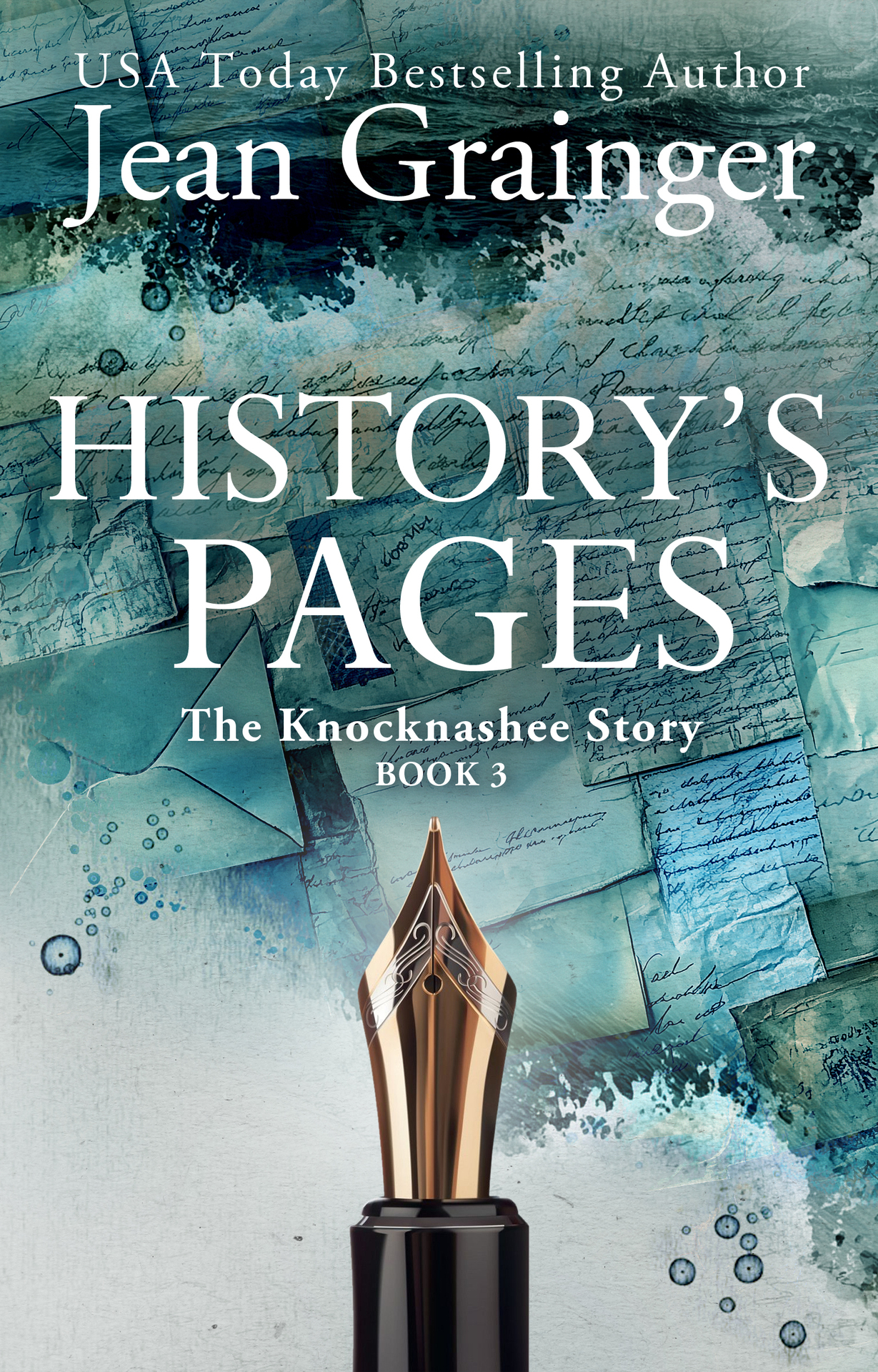
History’s Pages

Dive into the evocative world of History’s Pages by Jean Grainger—a heartfelt journey through time, memory, and identity. Enjoy an Instant Digital Download in Premium Quality EPUB/PDF, crafted for seamless reading on any device. Exclusive to Noveliohub, this powerful story will stay with you long after the final page.

Share :

Description

Welcome to Noveliohub

At Noveliohub, we bring stories to life through premium digital reading experiences designed for modern readers. With History’s Pages, you gain instant access to a beautifully formatted EPUB/PDF edition, ensuring you can begin reading within seconds of purchase—no waiting, no hassle. Whether you’re reading on your tablet, phone, Kindle, or laptop, our files are optimized for clarity, comfort, and convenience.

If you’re searching for a deeply emotional and immersive historical novel, your journey begins here with History’s Pages PDF Download—a story that bridges past and present with unforgettable characters and heartfelt storytelling.


The Hook (Spoiler-Free Overview)

History’s Pages by Jean Grainger is a richly layered novel that weaves together personal stories against the backdrop of history’s quiet yet powerful moments. At its heart lies a narrative about connection—between generations, between memory and truth, and between individuals navigating the echoes of the past.

The story follows characters whose lives intersect through unexpected circumstances, revealing hidden histories and emotional truths long buried beneath the surface. As secrets gradually unfold, readers are drawn into a tapestry of resilience, loss, and hope. Grainger masterfully balances intimate character development with broader historical context, creating a story that feels both personal and universal.

What makes this novel especially compelling is its ability to explore how the past shapes identity. The characters are not simply living their present—they are, in many ways, living the consequences of what came before. Through letters, memories, and revelations, the narrative gently peels back layers, inviting readers to reflect on their own connections to history.

For those seeking a meaningful and thought-provoking read, History’s Pages by Jean Grainger offers an unforgettable literary experience. And with the History’s Pages PDF Download, that journey is just one click away.


Why Readers Love Jean Grainger

Jean Grainger has earned a devoted readership thanks to her signature blend of historical depth and emotional storytelling. Known for crafting narratives that center on ordinary people in extraordinary circumstances, Grainger excels in bringing history down to a human level.

Her works often explore themes of family, identity, and resilience, set against vividly depicted historical backdrops—particularly Irish settings that feel authentic and deeply researched. Readers appreciate her ability to create relatable characters whose struggles and triumphs resonate across cultures and generations.

Grainger’s writing is accessible yet evocative, making her novels appealing to both casual readers and literary enthusiasts. If you enjoy historical fiction that prioritizes emotional depth over spectacle, her work consistently delivers.

With History’s Pages by Jean Grainger, she continues this tradition—offering a story that is as moving as it is memorable.


Deep Dive (Themes, Style, Audience)

At its core, History’s Pages is a meditation on how the past lives within us. One of the novel’s central themes is intergenerational memory—the idea that history is not confined to textbooks but carried through stories, relationships, and inherited experiences.

Grainger explores this theme through multiple perspectives, allowing readers to see how different characters interpret and respond to the same events. This layered storytelling adds richness and complexity, making the novel feel both expansive and intimate.

Another key theme is identity and belonging. Characters in the story grapple with questions about who they are and where they come from. As hidden truths emerge, they are forced to confront parts of themselves they may not fully understand—or even wish to acknowledge.

The writing style is elegant yet approachable. Grainger uses descriptive language to create vivid settings without overwhelming the reader. Her pacing is deliberate, giving emotional moments the space they need to resonate while maintaining narrative momentum.

The novel also features a strong sense of place, with settings that feel alive and integral to the story. Whether depicting quiet rural landscapes or emotionally charged interiors, Grainger creates environments that mirror the inner lives of her characters.

Target Audience:

  • Fans of historical fiction with emotional depth
  • Readers who enjoy character-driven narratives
  • Those interested in family sagas and generational storytelling
  • Book clubs looking for discussion-worthy material

If you appreciate novels that linger in your thoughts long after reading, History’s Pages PDF Download is an excellent choice.


The Noveliohub Premium Experience

When you purchase History’s Pages by Jean Grainger from Noveliohub, you’re not just buying an eBook—you’re investing in a premium reading experience.

Here’s what sets us apart:

  • Instant Access: Download your book immediately after purchase—no waiting, no shipping delays.
  • Premium Quality EPUB/PDF: Professionally formatted for readability across all devices.
  • Device Compatibility: Works seamlessly on Kindle, tablets, smartphones, and desktops.
  • Lifetime Access: Your purchase is محفوظ forever—download anytime, anywhere.
  • No Subscription Required: Pay once, own it forever—no recurring fees.

Unlike other platforms that restrict access or compromise quality, Noveliohub ensures that every reader receives a polished, reliable product.

With History’s Pages PDF Download, you can start reading within seconds and enjoy a flawless digital experience from beginning to end.


Comparison / Reading Recommendations

History’s Pages is a standalone novel, making it perfect for readers who want a complete and satisfying story without committing to a series.

If you enjoy books like:

  • The Nightingale by Kristin Hannah
  • The Letter by Kathryn Hughes
  • Before We Were Yours by Lisa Wingate

…then History’s Pages by Jean Grainger will feel right at home on your digital bookshelf.

It shares the same emotional depth, historical richness, and focus on human connection that make these titles so beloved.


Conclusion & Call to Action

Stories have the power to connect us—to each other, to the past, and to ourselves. History’s Pages is one such story: moving, thoughtful, and deeply human.

Now is the perfect time to experience it for yourself. With our Instant Digital Download, you can begin reading today—no delays, no complications.

Don’t miss out on this unforgettable journey.
Get your History’s Pages PDF Download now and discover why readers around the world are captivated by Jean Grainger’s storytelling.

👉 Add to Cart now and start reading instantly—only at Noveliohub.
Reviews

There are no reviews yet.

Be the first to review “History’s Pages”

Your email address will not be published. Required fields are marked *

Related Products

The Quarry Girls: A Thriller

Original price was: $4.99.Current price is: $0.00.

The Assassin’s Betrayal: CIA Assassin

Original price was: $4.99.Current price is: $0.00.

The Score (Off-Campus Book 3)

Original price was: $9.34.Current price is: $0.00.

The Mistake

Original price was: $9.34.Current price is: $0.00.

The Good Husband

Original price was: $2.99.Current price is: $0.00.

Jonah: An Epic Journey Through Mercy

Original price was: $2.99.Current price is: $0.00.

Gomer (Poetic Journeys of Grace Book 2)

Original price was: $3.99.Current price is: $0.00.

Beautiful Ugly

Original price was: $12.99.Current price is: $0.00.

Dungeon Crawler Carl

Original price was: $13.00.Current price is: $0.00.

Meant for Me: Gripping and emotional historical fiction inspired by true events (The Carlyle Women Book 1)

Original price was: $9.99.Current price is: $0.00.

Limited Time Offer

Get up to 50% OFF on Premium PDF Books Read more.

Testimonials

What Our Readers Say

Thousands of readers trust Novel IO Hub for quality ebooks and meaningful impact.
Here’s what our community says about their experience with our platform.

CHAPTER 1

KNOCKNASHEE, CO KERRY, IRELAND

AUGUST 1940

‘Now then, a stórín,’ Grace Fitzgerald cooed softly as she laid
Odile into her pram, a sturdy contraption of wood and leather
that Dymphna’s late husband, Tommy, had made for their two small
children out of an old drawer and bicycle wheels.
Paudie and Kate O’Connell were eight and six now, and the pram
had been in their turf shed for the last few years, but Declan
McKenna, her fellow teacher, had cleaned off the rust, and Pádraig O
Sé, the cobbler, had donated a fresh piece of leather for the rain
cover where the old one got cracked with the bad frost last winter,
and Dymphna had made new cushions.
‘We’re going for a nice sunny walk to meet your Aintín Tilly off
the bus,’ Grace continued as she tucked the bag of bottles and
napkins and clean folded baby clothes into the foot of the pram. ‘And
she’ll take you back to the farm, where your Mamó Mary will be
delighted to have you home again.’
Grace’s best friend, Tilly, had gone to see her sister, Marion, in
Dublin, and Mary O’Hare’s rheumatism was very bad at the moment,
so Grace had been minding the baby for a few nights. Having the
company of another human being in the house, even one as small as
Odile, had been lovely. Since Dymphna O’Connell left to be
housekeeper to the priests, the place could seem very empty during
the day. And even Agnes, bitter as she had been, was another
person in the house at night, but now there was nobody. She wasn’t
nervous – Charlie and Declan McKenna were just across the road,
and her neighbours all were close by – but it did feel lonely at times.
She sighed. ‘I’m going to be lost without you, Odile.’
Odile gurgled, smiled gummily up at her and waved her tiny fists.
Her blue eyes had turned to brown, and her fair hair was darkening
too. At four months old, the sturdy Parisian baby was thriving in
Knocknashee and showed no signs that being dragged halfway
across Europe in a leather bag and landed in the southwest of
Ireland had taken the slightest toll on her.
Grace laughed. ‘I know, a stór, life is good and I shouldn’t
complain.’
Straightening up from fixing the baby’s blankets, she caught her
own reflection in the hallstand mirror. The summer sun had lightly
tanned her skin and added threads of gold to her flame-red curls,
which tumbled below her shoulders now that Agnes wasn’t here to
say she was ‘making a show of herself’ by letting it hang loose. And
her new dress of emerald-green cotton was the exact colour of her
eyes.
She’d made it herself. Peggy Donnelly at the draper’s had slipped
her six yards of the material with a wink and a nod, well outside the
rationing restrictions, so she’d been able to cut the skirt long enough
to hide her right leg, which was shrunken by polio. Everyone said
the dress looked very smart on her.
She’d first worn it when she turned twenty in June, at a little
party for her birthday that her friends gave her. Dymphna O’Connell
had brought a lemon cake, which she’d saved up her sugar ration to
ice, and Tilly arrived with a whole honeycomb in a wooden box and
a cream lamb’s wool cardigan knitted by her mother. Father Iggy
presented her with a pretty silver cross on a delicate chain, Charlie
McKenna brought her a rose bush for her front garden, and Declan
gave her a book about the Aztecs and told her she looked lovely in
green.
After that she’d only worn the dress for Sunday Mass, taking it
off the moment she was home. But lately she’d had a thought. She
wasn’t likely to be going anywhere fancy, well, ever, so she might as
well wear it on other days also and get the good of it.
She had new shoes as well. Dr Hugh Warrington, her polio
consultant in Cork, had sent her a calliper he’d ordered from
England, and it was lighter and less cumbersome than the last one
he’d found her, so she’d asked Pádraig O Sé to make her a different
pair of shoes to go with it, of soft blue leather instead of stiff ugly
black. The right shoe still had to be built up and had holes in the
heel into which to slot the steel, but they were comfortable and
looked quite nice.
She left the house, pushing the pram down the stone path. The
light sea breeze off the ocean was lovely and warm, and fragrant
with the scent of the sweet peas clustered over the fence and the
rose bush Charlie had planted in the corner. The bush covered the
patch where Agnes had burnt their parents’ things, leaving a scorch
mark on the wall.
Through the gate from her garden into the schoolyard, she could
see Patrick O’Flynn, a lanky, freckled twelve-year-old with ears that
stuck out like a toby jug, sitting on the steps of the schoolhouse; he
was earning a few pennies by watching his father’s six skinny
mountain sheep as they ate down the grass and weeds, getting the
place ready for when school started again. Ned the pony kept the
grass short in the field behind, but the playground was better
cropped right down. Mountain sheep were the best for that, though
they needed watching like hawks; they were right divils for leaping
walls.
Eileen, Patrick’s mother, had stopped Grace after devotions last
Sunday night to thank her for giving him the job and letting the
sheep have the grass in the yard. With eleven children and only
three small rocky fields, everything was scarce in the O’Flynn house.
The two oldest girls had gone into service as soon as they turned
fifteen, one with Dr Ryan and another with an old lady in Dingle;
their oldest boy was apprenticed to a fisherman and often came
home with a few mackerel or a salmon; and their second son,
Fiachra, was the junior postman. But that still left six young ones
under ten, and Patrick who was twelve.
As Grace walked slowly down the cobbled street, Charlie
McKenna came out of the thatched post office, ready for his second
postal round of the day after sorting out the letters with Nancy
O’Flaherty, the postmistress.
‘Nothing for the O’Hares, Charlie?’ she asked. ‘Save you the spin
out – I’m meeting Tilly off the bus?’
‘No, Gracie, still nothing.’ Charlie looked sympathetic; he knew
that Tilly and Mary O’Hare were anxiously waiting to hear word of
their brother and son, Alfie, who was in Paris, fighting the German
powers of occupation of that city. Or at least they hoped he was,
and not already captured by the Germans or something awful like
that. Charlie added comfortingly, ‘There’s no postal service to speak
of out of the occupied places these days, so he probably can’t get
word out.’
‘I’m sure you’re right, Charlie,’ she agreed, praying that was true.
‘I’d say the letters from America are disrupted as well,’ he added,
now leaning over the pram and delighting Odile by shaking the little
wicker rattle Declan had made, with the dried berries inside. ‘Though
Peggy Donnelly heard from her brother in Boston today, so it’s hard
to tell which ones will make it across or not.’
The postman said this last part very kindly, but Grace felt a stab
of sadness. She had been hoping the reason she’d not got a letter
from Richard Lewis, only a telegram to say he’d got home safely,
was because of the battle in the North Atlantic, so it was hard to
hear there were others getting through. She understood why Charlie
had let her know; it was better to be prepared if Peggy mentioned it.
But it still hurt.
She’d almost collapsed with shock when Richard arrived out of
the blue in Knocknashee a few weeks ago with his friend Jacob
Nunez, handed Odile to her and Tilly, then left again three hours
later to get his ship back to the United States. His telegram had
arrived a week afterwards, saying he would write soon, so she’d
waited and waited, but nothing ever came.
She’d repeatedly gone over those few hours in her head, when
he’d sat in her house and then walked with her to the beach to see
the spot where she’d thrown the bottle containing her first letter into
the sea. It had been like a dream, it was all so strange, and
sometimes she was sure she’d imagined the whole thing. He was
even better looking in real life than in his photos, and he’d said the
same to her – that she was more beautiful than her photo. But
everything had been so fast, so rushed, it was impossible to know if
he seriously liked the look of her or was just being nice.
Probably just being nice, given her bandy leg and the way she
wasn’t quite five feet tall while he was a six-foot athletic young man.
She could picture him now, running long-legged across the beach
towards the bus, where Jacob Nunez waited impatiently for him to
board the bus.
Her last sight of him, the sun in his blond hair.
And now he was back in America and might as well be the man
on the moon in terms of how far he was from her. Not just
geographically but in every way. He was like a bright star that shone,
and she’d got to sit in his glow for a while, but then he was gone.
‘So I’ll see you later, Grace,’ said Charlie, taking his bike from
where it leant against the post office wall and slinging his leg over
the crossbar. He was thoroughly recovered from the shingles now.
‘Will you come over for a bite with myself and Declan later, before
the two of ye look over the new books that arrived for the teaching
course? I have a couple of rabbits I snared earlier and carrots and
potatoes from the garden.’
‘I will, Charlie, sounds lovely.’ She smiled. ‘And I’ll bring over one
of the Madeira cakes Dymphna brought up to me earlier.’
She and Charlie’s son, Declan, who was a year older than Grace
and taught the senior children in the two-room school where Grace
was headmistress, were starting a correspondence course in
September, with a tutor called Miss Harris who was based in the
Drumcondra Teacher Training College in Dublin. It wasn’t unusual in
rural schools for teachers not to be officially certified, but Grace felt
it was important to read up on the theory as well as learn from
experience, and it would mean Declan could earn a better wage as a
qualified teacher. At the moment he was being paid as an assistant
teacher and would never be able to afford a wife and family
though he always claimed not to be interested in any of the girls
who chased after him, swooning over his brooding dark looks.
As the postman cycled away, Grace limped on through the village
square, leaning on the handle of the pram. A few of her pupils were
using sticks to knock conkers, as they were called, out of the big
horse chestnut tree, then stripping off their prickly green coats and
making holes in the burnished nuts with a nail and a hammer to
thread them with string. They would then do battle with the conkers,
whacking them off each other while trying to crack the opponent’s.
Knuckles got a right walloping in that game, and she’d been scared
to play it as a child, but Tilly had had a twelvie, which meant a
conker that had smashed twelve of her opponents’ offerings.
Nothing scared Tilly.
As soon as the Angelus bell rang out from the church, they would
be called home for their tea, but until then the children were making
sure to enjoy the last week of the summer holidays.
Two little girls from the infant class, May O’Shaughnessy and
Dearbhile Deasy, were sitting at the side of the road plaiting daisy
chains to wear as necklaces. Another group had made squares on
the ground with twigs and were playing hopscotch, while a swarm of
boys raced up and down the cobbles after Patrick O’Flynn’s football.
Patrick had got that ball for his tenth birthday and had passed it
down to his younger brothers. It was a treasure for the whole
village, where a real leather ball was a rare sight.
‘Hello, Miss Fitz! Hello, Odile!’ chorused several of the boys and
girls when they spotted her coming with the pram, rushing across to
coo over the baby. Mikey O’Shea, eight years old himself now, leant
over the pram, swinging his conker on a string, grinning as Odile
tried to grab at it.
‘Is that a tooth coming through?’ Áine Walsh gasped, pointing at
the bud beginning to poke through Odile’s lower gum.
Á
‘It is, Áine, and isn’t she being good about it?’ said Grace. ‘She’s
not complained once.’ And it was true. Odile was such a funny,
sunny little thing most of the time, though she had a fiery temper
too. When she was hungry and didn’t get her bottle soon enough,
she could be heard two parishes away.
Patrick’s younger sister, Máire, stroked the baby’s round cheek
with her finger. ‘Is leanbh álainn thú, Odile,’ she said. Odile gurgled
in agreement, and all the children laughed.
‘Sure, listen to her,’ said Mikey. ‘She’ll be talking in no time.’
‘She will,’ agreed Grace.
Though she wished there was someone in the village who could
speak French as well as Irish to Odile. The O’Hares had let everyone
believe Odile was Alfie’s daughter. Nobody questioned it, because
Alfie was so unpredictable and wild – nothing about him could shock
anyone, not even him marrying a Frenchwoman called Constance
and sending their newborn baby home to be minded while they
stayed in Paris to fight the Germans. Sergeant Keane, a decent man,
had called up to the farm and said technically the baby should have
some paperwork or something. But he said he understood about the
Emergency, and that if Mary O’Hare, who knew all about herbs and
had cured his wife of a terrible cough, said her son was the baby’s
father, then that was good enough for him.
But Odile’s real father was a Parisian Jew called Paul Dreyfus,
who was married to Constance’s sister, Bernadette. And when the
French couple came to find their baby after the war, which would
take some explaining in itself, it would be hard on them if their child
spoke only Irish, and maybe a bit of English if she’d got as far as
going to school…though surely the war wouldn’t go on for another
five years?
She walked on, but when she got to the bus stop outside the
undertaker’s, it was deserted. She had arrived with time to spare,
and Bobby the Bus was usually at least half an hour late anyway, so
she pushed the pram on down the street past the shops so Odile
wouldn’t get bored. The baby didn’t like to be still.
Bríd Butler came to the door of her sweetshop as Grace passed.
She also exclaimed over the new tooth and insisted on giving