📚 Help Us Bring Stories to Everyone

Original price was: $12.99.Current price is: $2.99.

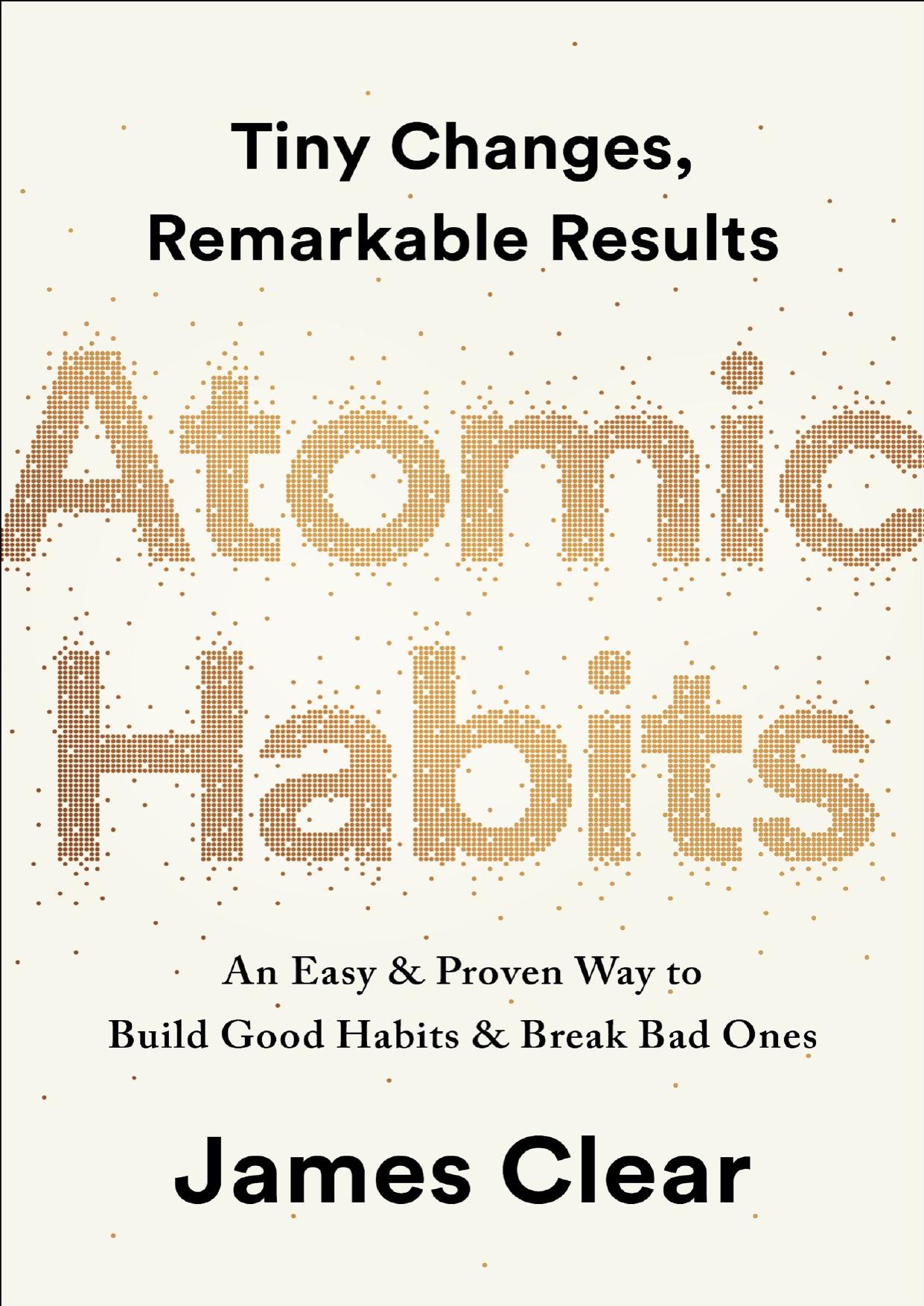
Atomic Habits_ Tiny Changes, Remarkable Results

Unlock the blueprint for lifelong success with Atomic Habits: Tiny Changes, Remarkable Results. This Instant Digital Download delivers a Premium Quality EPUB/PDF edition, formatted for flawless reading on any device. Get the definitive guide to habit formation, Exclusive to Noveliohub—start reshaping your future in minutes.

Share :

Description

Atomic Habits_ Tiny Changes, Remarkable Results_____

Welcome to Noveliohub, where premium literature meets instant accessibility. We are proud to offer you an exclusive digital edition of one of the most transformative books of the decade: Atomic Habits: Tiny Changes, Remarkable Results by James Clear.

Forget waiting for shipping or dealing with worn-out paperbacks. When you purchase this title from Noveliohub, you receive an Instant Digital Download in your choice of high-quality EPUB or PDF format. Whether you use an iPad, Kindle, Kobo, or your smartphone, this meticulously crafted file ensures a seamless reading experience. Dive into the science of tiny changes immediately after checkout.

The Hook: A Blueprint for Remarkable Results

Why do most New Year’s resolutions fail by February? Why is it so hard to stick to exercise, writing, or meditation? James Clear provides the answer not in massive overhauls, but in 1% improvements.

Atomic Habits argues that success is not a grand event but a system of small, consistent actions. Clear reveals that if you can get just 1% better each day, you will be thirty-seven times better by the end of the year. Conversely, 1% worse each day leads you to zero.

The book dismantles the myth of the “overnight success.” Instead, Clear focuses on identity-based habits: the difference between “I want to quit smoking” (outcome) and “I am not a smoker” (identity).

Through engaging stories—from the British Cycling team’s miraculous gold-medal turnaround to the Japanese railway system’s obsession with safety—Clear proves that atomic (tiny) habits compound into remarkable results. This is not a motivational fluff piece; it is a tactical operating manual for your life.

Why Readers Love James Clear

James Clear is not just an author; he is a behavioral psychology expert who has spent nearly a decade distilling complex scientific research into actionable prose. Unlike self-help gurus who rely on vague inspiration, Clear is a systematic thinker. His writing style is brutally efficient—every sentence serves a purpose.

Readers adore Clear because he bridges the gap between knowing and doing. He doesn’t just tell you to “be disciplined”; he gives you the Four Laws of Behavior Change:

  1. Make it Obvious.

  2. Make it Attractive.

  3. Make it Easy.

  4. Make it Satisfying.

He also explains the inverse for breaking bad habits. This pragmatic, almost engineering-like approach to human behavior has earned him a cult following among entrepreneurs, athletes, and artists. Atomic Habits by James Clear has sold over 15 million copies worldwide because it works for everyone—from the busy parent trying to cook healthier meals to the CEO optimizing a Fortune 500 company.

Deep Dive (No Spoilers): Themes, Writing Style & Audience

Themes:

  • The Plateau of Latent Potential: The most painful and important concept. Clear explains why you feel like you are putting in the work but not seeing results (the “Valley of Disappointment”) and how to push through.

  • Environment Design: A radical departure from willpower-based models. Clear argues that motivation is overrated; environment is underrated. He teaches you how to shape your space so that the right habits are easy and the wrong ones are impossible.

  • Habit Stacking: The specific technique of linking a new habit to an existing one (“After I pour my morning coffee, I will meditate for one minute”).

  • The Goldilocks Rule: Humans experience peak motivation when working on tasks that are right on the edge of their current abilities. Not too hard. Not too easy. Just right.

Writing Style:
Clear writes with the clarity of a journalist and the precision of a scientist. The book is structured into digestible chapters, each ending with a “Chapter Summary” and actionable steps. There is no academic jargon.

Complex concepts like dopamine feedback loops and cognitive friction are explained through simple metaphors (e.g., “The scoreboard,” “The paperclip strategy”). You can finish a chapter in 10 minutes, but you will think about it for hours.

Target Audience:
This book is for anyone who feels stuck. Specifically:

  • Students: Learn how to study without burnout.

  • Professionals: Break procrastination loops and build focus.

  • Creatives: Overcome writer’s block or artistic inertia.

  • Health seekers: Build exercise and nutrition habits that stick permanently.

  • Parents: Teach children the value of consistency over intensity.

If you have ever said, “I know what to do, I just can’t make myself do it,” this book is your solution.

The Noveliohub Premium Experience

Why should you buy Atomic Habits PDF Download from Noveliohub instead of a generic site or a physical store?

  • Instant Digital Access: No delivery trucks, no shipping fees, no waiting. Your download link is available immediately in your account dashboard and via email upon purchase.

  • Device Compatibility: Our EPUB and PDF files are professionally formatted. They reflow perfectly on Kindle, Apple Books, Kobo, Google Play Books, Calibre, and Adobe Digital Editions. No glitchy formatting. No missing paragraphs.

  • Lifetime Access: Lose your file? Need to switch devices? Log back into your Noveliohub account and re-download your purchase anytime, forever. No subscription required.

  • Exclusive to Noveliohub: This specific curated edition (with optimized meta tags and cover resolution) is only available on our platform. We hand-check every file for quality assurance.

  • Privacy & Security: Buy with confidence using SSL-encrypted checkout. No third-party ads. No tracking cookies for marketing nonsense.

When you buy Atomic Habits by James Clear here, you aren’t just buying a book; you are investing in a seamless, professional, and private library experience.

Comparison / Reading Order

Atomic Habits is a standalone title. It does not belong to a series, so you can dive right in without any prerequisites.

If you love this, you will also love:

  • The Power of Habit by Charles Duhigg (The psychology of habit loops).

  • Indistractable by Nir Eyal (Focus and distraction management).

  • Mindset by Carol Dweck (The psychology of growth).

  • Deep Work by Cal Newport (Concentration in a distracted world).

After finishing Atomic Habits, you may also enjoy James Clear’s “The Habits Academy” (a supplemental online course, not a book), but this title remains the definitive cornerstone text for behavior change.

Conclusion / Call to Action

You have tried the hard way. You have tried motivation. You have tried willpower. It is time to try a system that actually works.

Atomic Habits: Tiny Changes, Remarkable Results by James Clear is more than a book; it is a toolkit for rebuilding your life, one tiny change at a time. For the price of a coffee and a sandwich, you can own the blueprint that has changed millions of lives.

Stop waiting for a massive, life-altering breakthrough. That never comes. Instead, click “Add to Cart” right now. Download your Premium EPUB/PDF instantly. Read the first chapter in the next five minutes. And start your 1% improvement today.

Reviews

There are no reviews yet.

Be the first to review “Atomic Habits_ Tiny Changes, Remarkable Results”

Your email address will not be published. Required fields are marked *

Related Products

The Housemaid’s Secret

Original price was: $7.99.Current price is: $1.49.

The Housemaid Is Watching:

Original price was: $7.99.Current price is: $1.49.

The Wife Upstairs: A twisted psychological thriller that will keep you guessing

Original price was: $4.99.Current price is: $0.99.

The Psychology of Money

Original price was: $10.44.Current price is: $2.25.

My Husband’s Wife: A Novel

Original price was: $14.99.Current price is: $4.00.

Limited Time Offer

Get up to 50% OFF on Premium PDF Books Read more.

Testimonials

What Our Readers Say

Thousands of readers trust Novel IO Hub for quality ebooks and meaningful impact.
Here’s what our community says about their experience with our platform.

THE
FUNDAMENTALS
Why Tiny Changes Make a Big Difference

1

The Surprising Power of Atomic Habits

T

HE FATE OF British Cycling changed one day in 2003. The
organization, which was the governing body for professional
cycling in Great Britain, had recently hired Dave Brailsford as its new
performance director. At the time, professional cyclists in Great Britain
had endured nearly one hundred years of mediocrity. Since 1908,
British riders had won just a single gold medal at the Olympic Games,
and they had fared even worse in cycling’s biggest race, the Tour de
France. In 110 years, no British cyclist had ever won the event.
In fact, the performance of British riders had been so

underwhelming that one of the top bike manufacturers in Europe
refused to sell bikes to the team because they were afraid that it would
hurt sales if other professionals saw the Brits using their gear.
Brailsford had been hired to put British Cycling on a new trajectory.
What made him different from previous coaches was his relentless
commitment to a strategy that he referred to as “the aggregation of
marginal gains,” which was the philosophy of searching for a tiny
margin of improvement in everything you do. Brailsford said, “The
whole principle came from the idea that if you broke down everything
you could think of that goes into riding a bike, and then improve it by 1
percent, you will get a significant increase when you put them all
together.”

Brailsford and his coaches began by making small adjustments you
might expect from a professional cycling team. They redesigned the
bike seats to make them more comfortable and rubbed alcohol on the
tires for a better grip. They asked riders to wear electrically heated
overshorts to maintain ideal muscle temperature while riding and used
biofeedback sensors to monitor how each athlete responded to a
particular workout. The team tested various fabrics in a wind tunnel
and had their outdoor riders switch to indoor racing suits, which
proved to be lighter and more aerodynamic.
But they didn’t stop there. Brailsford and his team continued to find
1 percent improvements in overlooked and unexpected areas. They
tested different types of massage gels to see which one led to the fastest
muscle recovery. They hired a surgeon to teach each rider the best way
to wash their hands to reduce the chances of catching a cold. They
determined the type of pillow and mattress that led to the best night’s
sleep for each rider. They even painted the inside of the team truck
white, which helped them spot little bits of dust that would normally
slip by unnoticed but could degrade the performance of the finely
tuned bikes.

As these and hundreds of other small improvements accumulated,
the results came faster than anyone could have imagined.
Just five years after Brailsford took over, the British Cycling team
dominated the road and track cycling events at the 2008 Olympic
Games in Beijing, where they won an astounding 60 percent of the
gold medals available. Four years later, when the Olympic Games came
to London, the Brits raised the bar as they set nine Olympic records
and seven world records.
That same year, Bradley Wiggins became the first British cyclist to
win the Tour de France. The next year, his teammate Chris Froome
won the race, and he would go on to win again in 2015, 2016, and 2017,
giving the British team five Tour de France victories in six years.
During the ten-year span from 2007 to 2017, British cyclists won
178 world championships and sixty-six Olympic or Paralympic gold
medals and captured five Tour de France victories in what is widely
regarded as the most successful run in cycling history.*
How does this happen? How does a team of previously ordinary
athletes transform into world champions with tiny changes that, at
first glance, would seem to make a modest difference at best? Why do
small improvements accumulate into such remarkable results, and
how can you replicate this approach in your own life?
WHY SMALL HABITS MAKE A BIG DIFFERENCE

It is so easy to overestimate the importance of one defining moment
and underestimate the value of making small improvements on a daily
basis. Too often, we convince ourselves that massive success requires
massive action. Whether it is losing weight, building a business,
writing a book, winning a championship, or achieving any other goal,
we put pressure on ourselves to make some earth-shattering
improvement that everyone will talk about.
Meanwhile, improving by 1 percent isn’t particularly notable—
sometimes it isn’t even noticeable—but it can be far more meaningful,
especially in the long run. The difference a tiny improvement can make
over time is astounding. Here’s how the math works out: if you can get
1 percent better each day for one year, you’ll end up thirty-seven times
better by the time you’re done. Conversely, if you get 1 percent worse
each day for one year, you’ll decline nearly down to zero. What starts
as a small win or a minor setback accumulates into something much
more.
1% BETTER EVERY DAY
1% worse every day for one year. 0.99365 = 00.03
1% better every day for one year. 1.01365 = 37.78
FIGURE 1: The effects of small habits compound over time. For example, if
you can get just 1 percent better each day, you’ll end up with results that are
nearly 37 times better after one year.

Habits are the compound interest of self-improvement. The same
way that money multiplies through compound interest, the effects of
your habits multiply as you repeat them. They seem to make little
difference on any given day and yet the impact they deliver over the
months and years can be enormous. It is only when looking back two,
five, or perhaps ten years later that the value of good habits and the
cost of bad ones becomes strikingly apparent.
This can be a difficult concept to appreciate in daily life. We often
dismiss small changes because they don’t seem to matter very much in
the moment. If you save a little money now, you’re still not a
millionaire. If you go to the gym three days in a row, you’re still out of
shape. If you study Mandarin for an hour tonight, you still haven’t
learned the language. We make a few changes, but the results never
seem to come quickly and so we slide back into our previous routines.
Unfortunately, the slow pace of transformation also makes it easy to
let a bad habit slide. If you eat an unhealthy meal today, the scale
doesn’t move much. If you work late tonight and ignore your family,
they will forgive you. If you procrastinate and put your project off until
tomorrow, there will usually be time to finish it later. A single decision
is easy to dismiss.

But when we repeat 1 percent errors, day after day, by replicating
poor decisions, duplicating tiny mistakes, and rationalizing little
excuses, our small choices compound into toxic results. It’s the
accumulation of many missteps—a 1 percent decline here and there—
that eventually leads to a problem.
The impact created by a change in your habits is similar to the effect
of shifting the route of an airplane by just a few degrees. Imagine you
are flying from Los Angeles to New York City. If a pilot leaving from
LAX adjusts the heading just 3.5 degrees south, you will land in
Washington, D.C., instead of New York. Such a small change is barely
noticeable at takeoff—the nose of the airplane moves just a few feet—
but when magnified across the entire United States, you end up
hundreds of miles apart.*
Similarly, a slight change in your daily habits can guide your life to a
very different destination. Making a choice that is 1 percent better or 1
percent worse seems insignificant in the moment, but over the span of
moments that make up a lifetime these choices determine the
difference between who you are and who you could be. Success is the
product of daily habits—not once-in-a-lifetime transformations.
That said, it doesn’t matter how successful or unsuccessful you are
right now. What matters is whether your habits are putting you on the
path toward success. You should be far more concerned with your
current trajectory than with your current results. If you’re a millionaire
but you spend more than you earn each month, then you’re on a bad
trajectory. If your spending habits don’t change, it’s not going to end
well. Conversely, if you’re broke, but you save a little bit every month,
then you’re on the path toward financial freedom—even if you’re
moving slower than you’d like.
Your outcomes are a lagging measure of your habits. Your net worth
is a lagging measure of your financial habits. Your weight is a lagging
measure of your eating habits. Your knowledge is a lagging measure of
your learning habits. Your clutter is a lagging measure of your cleaning
habits. You get what you repeat.
If you want to predict where you’ll end up in life, all you have to do
is follow the curve of tiny gains or tiny losses, and see how your daily
choices will compound ten or twenty years down the line. Are you
spending less than you earn each month? Are you making it into the
gym each week? Are you reading books and learning something new
each day? Tiny battles like these are the ones that will define your
future self.
Time magnifies the margin between success and failure. It will
multiply whatever you feed it. Good habits make time your ally. Bad
habits make time your enemy.
Habits are a double-edged sword. Bad habits can cut you down just
as easily as good habits can build you up, which is why understanding
the details is crucial. You need to know how habits work and how to
design them to your liking, so you can avoid the dangerous half of the
blade.
YOUR HABITS CAN COMPOUND FOR YOU OR AGAINST YOU
Positive Compounding
Productivity compounds. Accomplishing one extra task is a small feat on any given day,
but it counts for a lot over an entire career. The effect of automating an old task or mastering
a new skill can be even greater. The more tasks you can handle without thinking, the more
your brain is free to focus on other areas.
Knowledge compounds. Learning one new idea won’t make you a genius, but a
commitment to lifelong learning can be transformative. Furthermore, each book you read not
only teaches you something new but also opens up different ways of thinking about old
ideas. As Warren Buffett says, “That’s how knowledge works. It builds up, like compound
interest.”
Relationships compound. People reflect your behavior back to you. The more you help
others, the more others want to help you. Being a little bit nicer in each interaction can result
in a network of broad and strong connections over time.
Negative Compounding
Stress compounds. The frustration of a traffic jam. The weight of parenting responsibilities.
The worry of making ends meet. The strain of slightly high blood pressure. By themselves,
these common causes of stress are manageable. But when they persist for years, little
stresses compound into serious health issues.
Negative thoughts compound. The more you think of yourself as worthless, stupid, or ugly,
the more you condition yourself to interpret life that way. You get trapped in a thought loop.
The same is true for how you think about others. Once you fall into the habit of seeing people
as angry, unjust, or selfish, you see those kind of people everywhere.
Outrage compounds. Riots, protests, and mass movements are rarely the result of a single
event. Instead, a long series of microaggressions and daily aggravations slowly multiply until
one event tips the scales and outrage spreads like wildfire.
WHAT PROGRESS IS REALLY LIKE
Imagine that you have an ice cube sitting on the table in front of you.
The room is cold and you can see your breath. It is currently twenty
five degrees. Ever so slowly, the room begins to heat up.
Twenty-six degrees.
Twenty-seven.
Twenty-eight.
The ice cube is still sitting on the table in front of you.
Twenty-nine degrees.
Thirty.
Thirty-one.
Still, nothing has happened.
Then, thirty-two degrees. The ice begins to melt. A one-degree shift,
seemingly no different from the temperature increases before it, has
unlocked a huge change.
Breakthrough moments are often the result of many previous
actions, which build up the potential required to unleash a major
change. This pattern shows up everywhere. Cancer spends 80 percent
of its life undetectable, then takes over the body in months. Bamboo
can barely be seen for the first five years as it builds extensive root
systems underground before exploding ninety feet into the air within
six weeks.
Similarly, habits often appear to make no difference until you cross
a critical threshold and unlock a new level of performance. In the early
and middle stages of any quest, there is often a Valley of
Disappointment. You expect to make progress in a linear fashion and
it’s frustrating how ineffective changes can seem during the first days,
weeks, and even months. It doesn’t feel like you are going anywhere.
It’s a hallmark of any compounding process: the most powerful
outcomes are delayed.
This is one of the core reasons why it is so hard to build habits that
last. People make a few small changes, fail to see a tangible result, and
decide to stop. You think, “I’ve been running every day for a month, so
why can’t I see any change in my body?” Once this kind of thinking
takes over, it’s easy to let good habits fall by the wayside. But in order
to make a meaningful difference, habits need to persist long enough to
break through this plateau—what I call the Plateau of Latent Potential.
If you find yourself struggling to build a good habit or break a bad
one, it is not because you have lost your ability to improve. It is often
because you have not yet crossed the Plateau of Latent Potential.
Complaining about not achieving success despite working hard is like
complaining about an ice cube not melting when you heated it from
twenty-five to thirty-one degrees. Your work was not wasted; it is just
being stored. All the action happens at thirty-two degrees.
When you finally break through the Plateau of Latent Potential,
people will call it an overnight success. The outside world only sees the
most dramatic event rather than all that preceded it. But you know that
it’s the work you did long ago—when it seemed that you weren’t
making any progress—that makes the jump today possible.
It is the human equivalent of geological pressure. Two tectonic
plates can grind against one another for millions of years, the tension
slowly building all the while. Then, one day, they rub each other once
again, in the same fashion they have for ages, but this time the tension
is too great. An earthquake erupts. Change can take years—before it
happens all at once.
Mastery requires patience. The San Antonio Spurs, one of the most
successful teams in NBA history, have a quote from social reformer
Jacob Riis hanging in their locker room: “When nothing seems to help,
I go and look at a stonecutter hammering away at his rock, perhaps a
hundred times without as much as a crack showing in it. Yet at the
hundred and first blow it will split in two, and I know it was not that
last blow that did it—but all that had gone before.”
THE PLATEAU OF LATENT POTENTIAL
FIGURE 2: We often expect progress to be linear. At the very least, we hope
it will come quickly. In reality, the results of our efforts are often delayed. It is
not until months or years later that we realize the true value of the previous
work we have done. This can result in a “valley of disappointment” where
people feel discouraged after putting in weeks or months of hard work
without experiencing any results. However, this work was not wasted. It was
simply being stored. It is not until much later that the full value of previous
efforts is revealed.
All big things come from small beginnings. The seed of every habit
is a single, tiny decision. But as that decision is repeated, a habit
sprouts and grows stronger. Roots entrench themselves and branches
grow. The task of breaking a bad habit is like uprooting a powerful oak
within us. And the task of building a good habit is like cultivating a
delicate flower one day at a time.
But what determines whether we stick with a habit long enough to
survive the Plateau of Latent Potential and break through to the other
side? What is it that causes some people to slide into unwanted habits
and enables others to enjoy the compounding effects of good ones?