
📚 Help Us Bring Stories to Everyone

Original price was: $12.99.Current price is: $2.99.

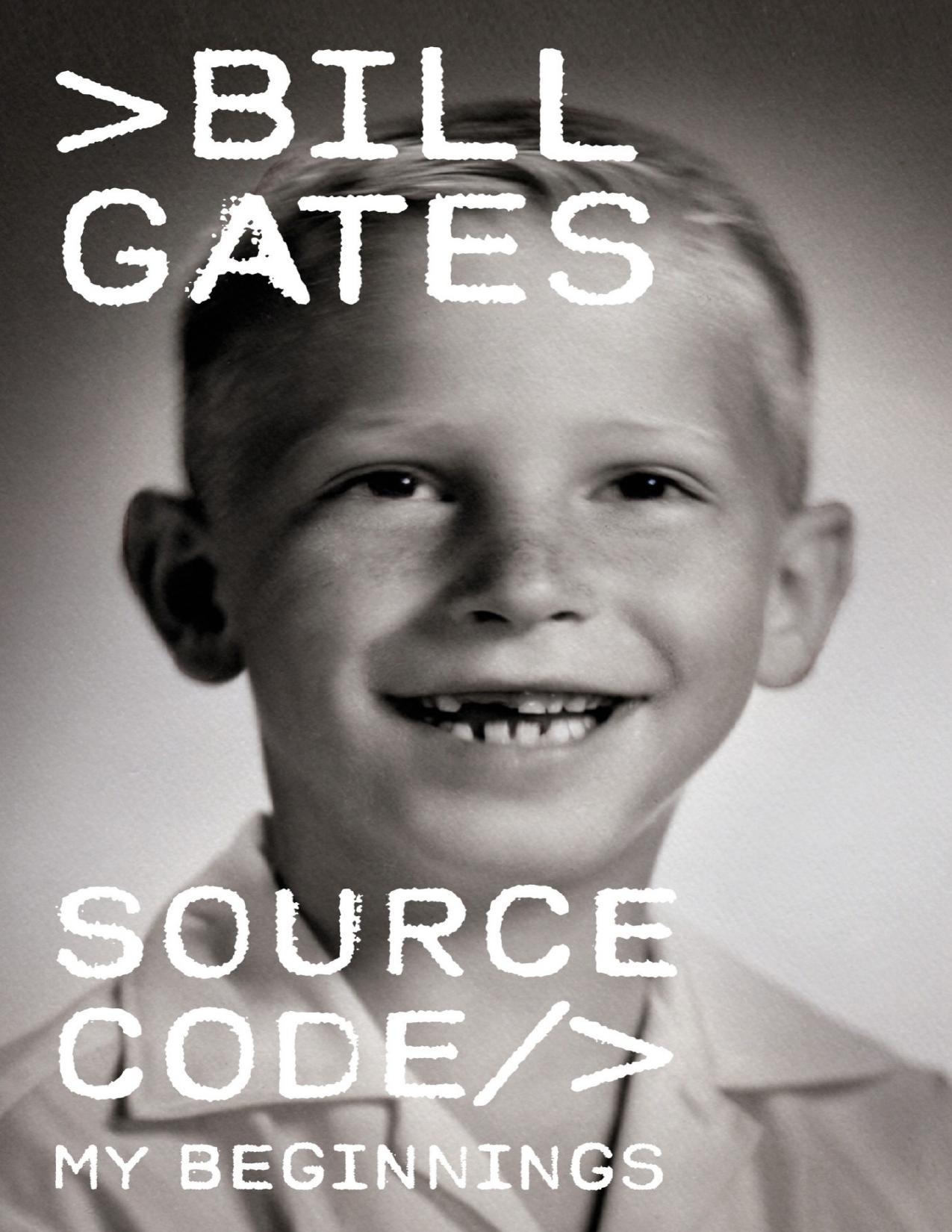
Source Code: My Beginnings

Discover the human story behind the tech titan in Source Code: My Beginnings, Bill Gates’ candid new memoir exploring his childhood, neurodivergent mind, and the friendships that sparked Microsoft. Instant Digital Download – Dive into this Premium Quality EPUB/PDFExclusive to Noveliohub, and witness the origin story of a revolution.

Share :

Description

Introduction
Welcome to Noveliohub, your premier destination for the world’s most compelling stories in premium digital formats. We are thrilled to offer Source Code: My Beginnings by Bill Gates, exclusively available for instant digital download. Skip the wait and the shipping costs—within moments, you can immerse yourself in one of 2025’s most anticipated memoirs, beautifully rendered in high-quality EPUB and PDF formats that retain the integrity of the original print edition. As a valued member of the Noveliohub community, you gain immediate access to a library of excellence, starting with this intimate portrait of one of the modern era’s defining figures .

The Hook: A Spoiler-Free Summary
Source Code: My Beginnings is not a dry recounting of Microsoft’s corporate milestones or a victory lap of a billionaire; it is, rather, a surprisingly tender and self-aware excavation of the soil that grew a revolution . This first volume of a planned trilogy ends in 1979, just as a 23-year-old Bill Gates drives back to Seattle to move his fledgling company, Microsoft, home—long before Windows, before the internet, and before he became a household name . The book opens in the post-war optimism of Seattle, where a young, hyperkinetic boy nicknamed “Trey” navigates the world with a brain wired differently. Gates paints a vivid picture of a childhood defined by strategic card games with his brilliant grandmother “Gami,” where he learned that life is a puzzle to be solved, not a game of luck .

We follow him through the hallways of the elite Lakeside School, where he meets Paul Allen and the late Kent Evans—the friend who first showed him that ambition could be a shared language. It was here, in a dark room with a clunky Teletype machine, that Gates first encountered the cold, beautiful logic of code. The book captures the electric, obsessive energy of those early days: dumpster-diving for discarded code manuals, hacking systems to get more computer time, and the trauma of losing a best friend that would inadvertently deepen his partnership with Allen . This is the story of how an often-misunderstood, rocking “bratty smartass” found his tribe in lines of code, setting the stage for an empire he didn’t even know he was building .

Why Readers Love Bill Gates
Bill Gates is an enigma: a figure so historically significant that his name is synonymous with the digital age, yet for decades, the private interior of his mind remained a black box. Readers are drawn to Source Code precisely because it lowers the drawbridge to the castle. Unlike the polished corporate persona, this memoir reveals Gates as neurodivergent before that was a common term, a boy who preferred the silent precision of a mainframe to the chaotic noise of the schoolyard .

This book appeals to a wide spectrum of readers—not just tech enthusiasts. Business leaders appreciate the granular look at the grit required to build an industry from scratch. Historians value the cultural snapshot of mid-century America and the dawn of the personal computer . But above all, readers connect with the vulnerability. The book is dedicated to his family, and the prose carries a warmth rarely associated with the man once known for his intimidating monomania . In this memoir, Gates analyzes his own internal “source code”—the upbringing, the privilege, the trauma, and the luck—with a reflective honesty that has surprised even his critics .

Deep Dive: Themes, Style, and Audience (No Spoilers)
Source Code operates on two distinct thematic tracks that ultimately converge. The first is The Wiring of a Genius. Gates spends considerable time dissecting what we now call neurodivergence. He describes the metronomic rocking back and forth that helped him focus, the inability to gauge social cues that made him a target for bullies, and the profound ability to “hyperfocus” on problems that interested him . For parents of children who think differently, this book is a beacon of hope—a testament to channeling unique cognitive wiring into world-changing output.

The second track is The Geography of Opportunity. Gates does not shy away from his privilege; he acknowledges that being born a white male in a prosperous Seattle family in 1955 was a lottery win. His parents could afford Lakeside School, which happened to have a computer at a time when most universities didn’t. Yet, the book also highlights the critical, non-monetary advantages: a grandmother who taught strategy, a mother who enforced social grace, and a best friend (Evans) who expanded his intellectual curiosity beyond math and into the wider world .

Writing Style: Gates’ prose is conversational and fluid, a surprising departure from the dry technical papers he might have written in his youth. Co-narrated in the audiobook version by Wil Wheaton (who also voices the memoir with a tone of wonder), the text feels like a late-night conversation with a reflective elder statesman . He is direct but not cold, analytical but now more empathetic.

Target Audience: This book is for the tech professional seeking inspiration, the history buff analyzing the 1960s counterculture’s impact on Silicon Valley, and the memoir lover who appreciates a rare glimpse behind a carefully curated public facade. If you enjoyed Walter Isaacson’s biographies of Steve Jobs or The InnovatorsSource Code is the essential first-person companion piece. It is also an incredibly compelling read for anyone who has ever felt like their brain operated on a different frequency than everyone else’s .

The Noveliohub Premium Experience
Why choose Noveliohub for your digital copy of Source Code? Because we believe reading should be immediate, seamless, and permanent.

  • Instant Access: There is no waiting for stock or delivery. The moment you complete your purchase, the book is yours. No queues, no delays—just the pure immediacy of literature .

  • Premium Quality: Our EPUB and PDF files are not scanned knock-offs. They are meticulously formatted digital editions optimized for clear text rendering and proper chapter navigation. Whether you are reading on a Kindle, an iPad, a Kobo, or your smartphone, the experience is pristine.

  • No Subscription Required: This is a key difference. Unlike other platforms that lock content behind monthly paywalls, Noveliohub offers Lifetime Access to the files you buy. Pay once, read forever. You own the book.

  • Device Compatibility: We support the open standard of EPUB, ensuring compatibility across the vast ecosystem of e-readers and apps. Your reading is not held hostage by a single manufacturer’s hardware.

Comparison/Reading Order
Source Code: My Beginnings is the first volume in a planned three-part memoir series by Bill Gates. It is the foundational text. This volume covers the years 1955 to 1979—the “pre-history” of Microsoft . If you are looking to understand the entire arc of Bill Gates’ life, this is where you must start.

  • Volume 1: Source Code (The Early Years) – Currently Reading

  • Volume 2: (Expected 2027) Will cover the Microsoft years—the rise of Windows, the antitrust battles, and the “monomaniacal” 20s and 30s that built a $3 trillion company .

  • Volume 3: (Future) Will focus on philanthropy and the Gates Foundation .

If you loved the detailed origin story of the 1970s tech scene in What the Dormouse Said or the personal psychological profile of Becoming Steve Jobs, you will find Source Code an indispensable and more personal account of the same era.

Conclusion/Call to Action
Source Code: My Beginnings is more than a book; it is an operating manual for a mind that helped build the 21st century. It is a story of luck, love, loss, and the strange beauty of a teenager finding his purpose in 4 kilobytes of memory. Don’t settle for delayed shipping or lower-quality scans. Treat yourself to the Premium Digital Download of this landmark memoir.
Add to Cart now and get instant, exclusive access to Bill Gates’ story—only at Noveliohub.
Reviews

There are no reviews yet.

Be the first to review “Source Code: My Beginnings”

Your email address will not be published. Required fields are marked *

Related Products

Careless People

Original price was: $16.99.Current price is: $4.99.

Strangers_ A Memoir of Marriage

Original price was: $13.99.Current price is: $3.99.

Limited Time Offer

Get up to 50% OFF on Premium PDF Books Read more.

Testimonials

What Our Readers Say

Thousands of readers trust Novel IO Hub for quality ebooks and meaningful impact.
Here’s what our community says about their experience with our platform.

Prologue

When I was around thirteen, I started hanging out with a group of boys
who met up for regular long hikes in the mountains around Seattle.
We got to know each other as Boy Scouts. We did plenty of hiking and
camping with our troop, but very quickly we formed a sort of splinter group
that went on our own expeditions—and that’s how we thought of them, as
expeditions. We wanted more freedom and more risk than the trips the
Scouts offered.
There were usually five of us—Mike, Rocky, Reilly, Danny, and me.
Mike was the leader; he was a few years older than the rest of us and had
vastly more outdoor experience. Over the course of three years or so, we
hiked hundreds of miles together. We covered the Olympic National Forest
west of Seattle and Glacier Peak Wilderness to the northeast and did hikes
along the Pacific Coast. We’d often go for seven days or more at a stretch,
guided only by topographic maps through old-growth forests and rocky
beaches where we tried to time the tides as we hustled around points. During
school breaks, we’d take off on extended trips, hiking and camping in all
weather, which in the Pacific Northwest often meant a week of soaked, itchy
Army surplus wool pants and pruney toes. We weren’t doing technical
climbing. No ropes or slings or sheer rock faces. Just long, hard hikes. It
wasn’t dangerous beyond the fact that we were teenagers deep in the
mountains, many hours from help and well before cell phones were a thing.
Over time we grew into a confident, tight-knit team. We’d finish a full day
of hiking, decide upon a place to camp, and with hardly a word we’d all fall
into our jobs. Mike and Rocky might tie up the tarp that would be our roof
for the night. Danny foraged the undergrowth for dry wood, and Reilly and I
coaxed a starter stick and twigs into our fire for the night.
And then we ate. Cheap food that was light in our packs but substantial
enough to fuel us through the trip. Nothing ever tasted better. For dinner we’d
chop up a brick of Spam and mix it with Hamburger Helper or a packet of
beef Stroganoff mix. In the morning, we might have Carnation Instant
Breakfast mix or a powder that with water transformed into a western omelet,
at least according to the package. My morning favorite: Oscar Mayer Smokie
Links, a sausage billed as “all meat,” now extinct. We used a single frying pan
to prepare most of the food, and we ate out of empty #10 coffee cans we each
carried. Those cans were our water pails, our saucepans, our oatmeal bowls. I
don’t know who among us invented the hot raspberry drink. Not that it was a
great culinary innovation: just add instant Jell-O mix to boiling water and
drink. It worked as dessert or as a morning sugar boost before a day of
hiking.
We were away from our parents and the control of any adults, making our
own decisions about where to go, what to eat, when we slept, judging for
ourselves what risks to take. At school, none of us were the cool kids. Only
Danny played an organized sport—basketball—and he soon quit that to make
time for our hikes. I was the skinniest of the group and usually the coldest,
and I always felt like I was weaker than the others. Still, I liked the physical
challenge, and the feeling of autonomy. While hiking was becoming popular
in our part of the country, not a lot of teenagers were traipsing off in the
woods for eight days on their own.
That said, it was the 1970s, and attitudes toward parenting were looser
than they are today. Kids generally had more freedom. And by the time I was
in my early teens, my parents had accepted that I was different from many of
my peers and had come to terms with the fact that I needed a certain amount
of independence in making my way through the world. That acceptance had
been hard-won—especially for my mother—but it would play a defining part
in who I was to become.
Looking back on it now, I’m sure all of us were searching for something
on those trips beyond camaraderie and a sense of accomplishment. We were
at that age when kids test their limits, experiment with different identities—
and also sometimes feel a yearning for bigger, even transcendent experiences.
I had started to feel a clear longing to figure out what my path would be. I
wasn’t sure what direction it would take, but it had to be something
interesting and consequential.
Also in those years, I was spending a lot of time with a different group of
boys. Kent, Paul, Ric, and I all went to the same school, Lakeside, which had
set up a way for students to connect with a big mainframe computer over a
phone line. It was incredibly rare back then for teenagers to have access to a
computer in any form. The four of us really took to it, devoting all our free
time to writing increasingly more sophisticated programs and exploring what
we could do with that electronic machine.
On the surface, the difference between hiking and programming couldn’t
have been greater. But they each felt like an adventure. With both sets of
friends I was exploring new worlds, traveling to places even most adults
couldn’t reach. Like hiking, programming fit me because it allowed me to
define my own measure of success and it seemed limitless, not determined by
how fast I could run or how far I could throw. The logic, focus, and stamina
needed to write long, complicated programs came naturally to me. Unlike in
hiking, among that group of friends, I was the leader.

Toward the end of my sophomore year, in June 1971, Mike called me with
our next trip: fifty miles in the Olympic Mountains. The route he chose was
called the Press Expedition Trail, after a group sponsored by a newspaper that
had explored the area in 1890. Did he mean the same trip on which the men
nearly starved to death and their clothes rotted on their bodies? Yes, but that
was a long time ago, he said.
Eight decades later it would still be a tough hike; that year had brought a
lot of snow, so it was a particularly daunting proposition. But since everyone
else—Rocky, Reilly, and Danny—was up for it, there was no way I was going
to wimp out. Plus, a younger scout, a guy named Chip, was game. I had to go.
The plan was to climb the Low Divide pass, descend to the Quinault
River, and then hike the same trail back, staying each night in log shelters
along the way. Six or seven days total. The first day was easy and we spent the
night in a beautiful snow-covered meadow. Over the next day or two, as we
climbed the Low Divide, the snow got deeper. When we reached the spot
where we planned to spend the night, the shelter was buried in snow. I
enjoyed a moment of private elation. Surely, I thought, we’d backtrack, head
down to a far more welcoming shelter we had passed earlier in the day. We’d
make a fire, get warm, and eat.
Mike said we’d take a vote: head back or push on to our final destination.
Either choice meant a several-hour hike. “We passed a shelter at the bottom;
it’s eighteen hundred feet down. We could go back down and stay there, or we
could continue on to the Quinault River,” Mike said. He didn’t need to spell
out that going back meant aborting our mission to reach the river.
“What do you think, Dan?” Mike asked. Danny was the unofficial second
in command in our little group. He was taller than everyone else, and a very
capable hiker with long legs that never seemed to tire. Whatever he said
would sway the vote.
“Well, we’re almost there, maybe we should just go on,” Danny said. As
the hands went up, it was clear I was in the minority. We’d push on.
A few minutes down the trail I said, “Danny, I’m not happy with you. You
could have stopped this.” I was joking—sort of.
I remember this trip for how cold and miserable I felt that day. I also
remember it for what I did next. I retreated into my own thoughts.
I pictured computer code.
Around that time, someone had loaned Lakeside a computer called a
PDP-8, made by Digital Equipment Corp. This was 1971, and while I was
deep into the nascent world of computers, I had never seen anything like it.
Up until then, my friends and I had used only huge mainframe computers that
were simultaneously shared with other people. We usually connected to them
over a phone line or else they were locked in a separate room. But the PDP-8
was designed to be used directly by one person and was small enough to sit on
the desk next to you. It was probably the closest thing in its day to the
personal computers that would be common a decade or so later—though one
that weighed eighty pounds and cost $8,500. For a challenge, I decided I
would try to write a version of the BASIC programming language for the new
computer.
Before the hike I was working on the part of the program that would tell
the computer the order in which it should perform operations when someone
inputs an expression such as 3(2 + 5) x 8 − 3, or wants to create a game that
requires complex math. In programming that feature is called a formula
evaluator. Trudging along with my eyes on the ground in front of me, I
worked on my evaluator, puzzling through the steps needed to perform the
operations. Small was key. Computers back then had very little memory,
which meant programs had to be lean, written using as little code as possible
so as not to hog memory. The PDP-8 had just 6 kilobytes of the memory a
computer uses to store data that it’s working on. I’d picture the code and then
try to trace how the computer would follow my commands. The rhythm of
walking helped me think, much like a habit I had of rocking in place. For the
rest of that day my mind was immersed in my coding puzzle. As we
descended to the valley floor, the snow gave way to a gently sloping trail
through an old forest of spruce and fir trees until we reached the river, set up
camp, ate our Spam Stroganoff, and finally slept.
By early the next morning we were climbing back up the Low Divide in
heavy wind and sleet that whipped sideways in our faces. We stopped under a
tree long enough to share a sleeve of Ritz crackers and continued. Every
camp we found was full of other hikers waiting out the storm. So we just kept
going, adding more hours to an interminable day. Crossing a stream, Chip fell
and gashed his knee. Mike cleaned the wound and applied butterfly bandages;
now we moved only as fast as Chip limped. All the while, I silently honed my
code. I hardly spoke a word during the twenty miles we hiked that day.
Eventually we came to a shelter that had room for us and set up camp.
Like the famous line “I would have written a shorter letter, but I did not
have the time,” it’s easier to write a program in sloppy code that goes on for
pages than to write the same program on a single page. The sloppy version
may also run more slowly and use more memory. Over the course of that
hike, I had the time to write short. On that long day I slimmed it down more,
like whittling little pieces off a stick to sharpen the point. What I made
seemed efficient and pleasingly simple. It was by far the best code I had ever
written.
As we made our way back to the trailhead the next afternoon, the rain
f
inally gave way to clear skies and the warmth of sunlight. I felt the elation
that always hit me after a hike, when all the hard work was behind me.