📚 Help Us Bring Stories to Everyone

Original price was: $14.99.Current price is: $4.49.

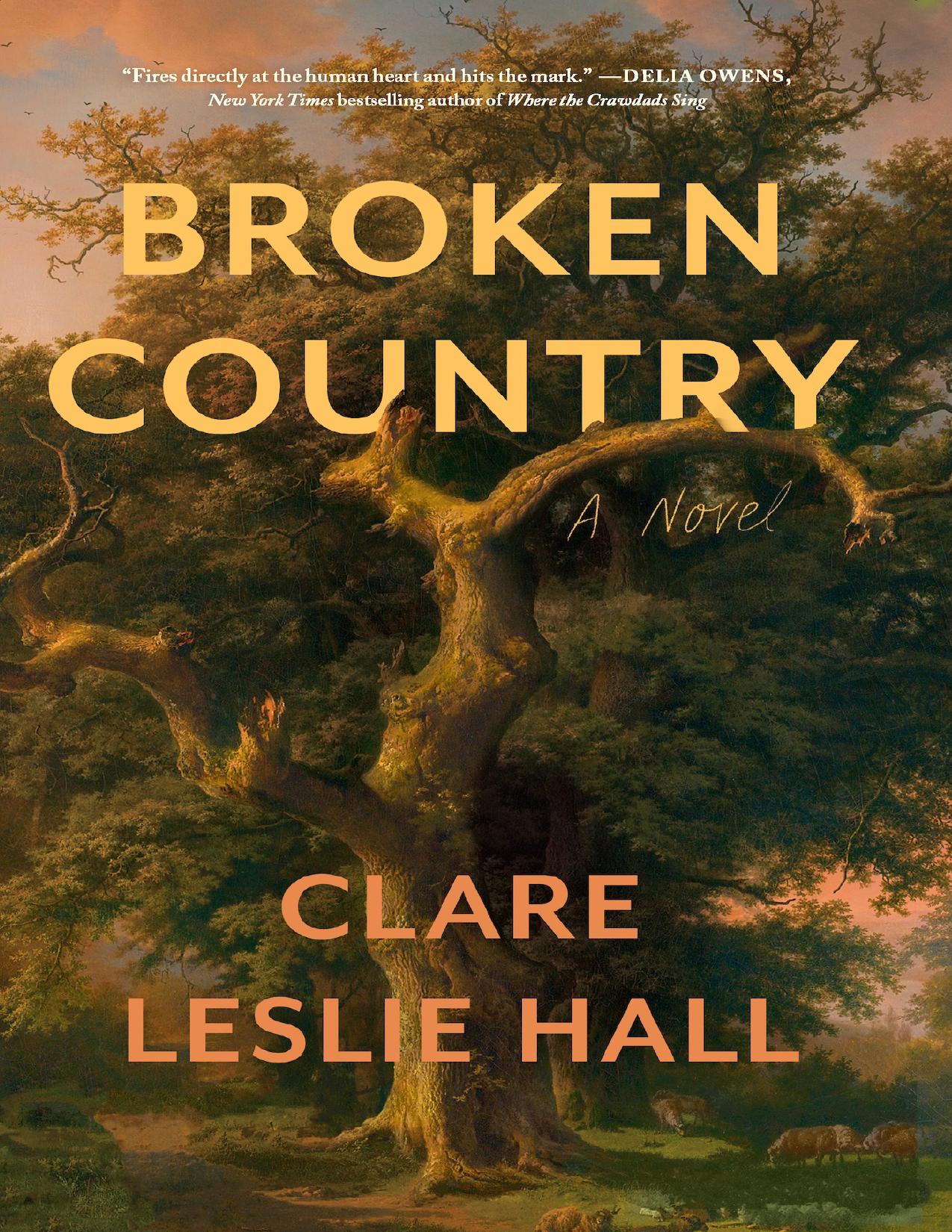
Broken Country (Reese’s Book Club)

Experience the Premium Quality EPUB/PDF formats of Clare Leslie Hall’s gripping Reese’s Book Club pick. A story of fractured family ties and dangerous secrets that will hold you hostage until the final page. Exclusive to Noveliohub – clean files, lifetime access, no ads.

Share :

Description

Welcome to Noveliohub – Your Premium Digital Bookstore

Dear reader, thank you for choosing Noveliohub. We don’t just sell books; we deliver literary experiences in their finest digital form. You are about to purchase an Instant Digital Download of Broken Country (Reese’s Book Club) by Clare Leslie Hall – available in beautifully formatted EPUB and PDF files, ready for your Kindle, iPad, Kobo, or smartphone. No waiting for shipping. No monthly subscription. Just you and an unforgettable story.

The Hook (No Spoilers)

Broken Country is not just a book; it is a slow-burning fuse.

Clare Leslie Hall introduces us to Beth, a woman who believed she had escaped her past. Living a quiet, structured life in the English countryside with her husband and daughter, Beth has carefully buried the trauma of her adolescence.

But the past has a long shadow. When her estranged brother, a man haunted by his own demons, returns home, he brings with him a suitcase of secrets that threatens to shatter Beth’s carefully constructed world.

The narrative is told across two timelines – the “then” of a wild, dangerous teenage friendship and a tragic accident, and the “now” of a marriage on the edge of collapse. When a body is discovered on the family’s land, and old loyalties are tested, Beth realizes that some wounds never heal. They fester. And they demand a price.

Reese’s Book Club describes it as “a propulsive literary thriller about how far we’ll go to protect the ones we love… and hide from what we’ve done.” If you loved Where the Crawdads Sing meets The Paper Palace, this is your next obsession.

Why Readers Love Clare Leslie Hall

Clare Leslie Hall is a master of the “literary slow burn.” Unlike fast-paced commercial thrillers, Hall invites you to live inside her characters’ anxieties. She has been compared to Louise Doughty (Apple Tree Yard) and Ashley Audrain (The Push) for her ability to dissect maternal guilt and fractured psychology.

  • Genre reputation: Hall blurs the lines between literary fiction, domestic noir, and gothic countryside drama. She writes landscapes as characters – the muddy fields, the cold river, the abandoned barns become mirrors of the soul.

  • Emotional authenticity: Readers praise her for never taking the easy way out. Her endings are earned, messy, and heartbreakingly real.

  • Reese’s Book Club effect: Books selected by Reese Witherspoon’s club are guaranteed to spark conversation. Broken Country joins a legacy of massive bestsellers (Eleanor Oliphant, The Last Thing He Told Me), meaning you are buying a cultural moment.

Deep Dive (No Spoilers) – Themes, Writing Style & Audience

Themes

  • The impossibility of escape: No matter how far you run geographically, psychological trauma follows. Beth’s move to the country is an illusion of safety.

  • Sibling loyalty vs. self-preservation: How much of your own peace are you willing to sacrifice for a brother who keeps destroying everything he touches?

  • Class and countryside rot: Hall subtly critiques the English landed gentry – the decaying farms, the silent judgment of village life, and the secrets that wealthy families bury.

  • Maternal instinct: The book asks a terrifying question: Would you let your child believe a lie if it meant keeping them safe?

Writing Style
Hall writes in short, punchy chapters (perfect for “just one more chapter” syndrome). Her prose is lyrical but never purple. She uses the weather constantly – mist, frost, sudden rain – to signal emotional shifts. Dialogue is sparse and weighted. You will feel the silence between characters like a third presence.

Target Audience
This book is for adults (18+) who enjoy:

  • Character-driven psychological fiction.

  • Slow-burn tension over jump-scares.

  • Books about family dysfunction (Ask Again, YesLittle Fires Everywhere).

  • Atmospheric settings (rainy UK countryside, winter).

  • Reese’s Book Club selections looking for depth, not just plot.

⚠️ Content warning: Off-page references to substance abuse, suicide ideation, and miscarriage. Hall handles these with care, but sensitive readers should be aware.

The Noveliohub Premium Experience – Why Buy From Us?

You might find Broken Country elsewhere. But you will not find Noveliohub’s quality guarantee.

✅ Instant Digital Download: Payment confirmed? Your files are ready. No email delays. No “processing” screen. Direct download from your account dashboard.
✅ Device Compatibility: We provide both EPUB (for Apple Books, Kobo, Nook, Google Play Books, Android readers) and PDF (for PC, Mac, iPhone with Books app, or any tablet). One price, two formats.
✅ Premium Formatting: No messy line breaks. No missing chapter headings. No weird fonts. Our EPUB includes a clickable table of contents, properly styled drop caps, and optimized margins for dark mode.
✅ Lifetime Access: Lose the file? Email us. Your purchase is stored in your Noveliohub account forever. Redownload any time.
✅ No Subscription Required: Unlike “unlimited” services that rotate titles, you own this book. Forever.
✅ Exclusive to Noveliohub: You will not find this specific curated file version (with metadata cleanly edited for library sorting) on mass aggregators.

If You Love… (Reading Recommendations)

Broken Country is a standalone novel. No need to read any prequels. However, if you finish it and crave more, try:

  • If you love the countryside thriller vibe → The Skeleton Key by Erin Kelly

  • If you love the “returning sibling wrecks everything” → The Paper Palace by Miranda Cowley Heller

  • If you love Reese’s Book Club literary suspense → The Last Thing He Told Me by Laura Dave

  • If you love unreliable mothers → The Push by Ashley Audrain

Conclusion – Add to Cart Today

You came here looking for Broken Country by Clare Leslie Hall. You found a premium digital edition, a spoiler-free deep dive, and a community of readers who value quality. The book is dark, beautiful, and impossible to put down. But more than that – it’s a conversation starter. It’s the book your book club will argue about for hours.

Don’t wait for a delivery truck. Don’t settle for badly scanned PDFs from unknown websites.

Click “Add to Cart” now. Download instantly. Start reading Broken Country within minutes.

Welcome to Noveliohub. Happy reading. 📖☕
Reviews

There are no reviews yet.

Be the first to review “Broken Country (Reese’s Book Club)”

Your email address will not be published. Required fields are marked *

Related Products

The Let Them Theory

Original price was: $17.99.Current price is: $6.99.

The Housemaid: An absolutely addictive psychological thriller with a jaw-dropping twist

Original price was: $6.99.Current price is: $0.79.

Theo of Golden_ A Novel

Original price was: $11.99.Current price is: $1.99.

James (Pulitzer Prize Winner): A Novel

Original price was: $14.99.Current price is: $3.99.

Outlive_ The Science and Art of Longevity

Original price was: $11.99.Current price is: $3.49.

Limited Time Offer

Get up to 50% OFF on Premium PDF Books Read more.

Testimonials

What Our Readers Say

Thousands of readers trust Novel IO Hub for quality ebooks and meaningful impact.
Here’s what our community says about their experience with our platform.

Part One

Gabriel

The farmer is dead, he is dead and all anyone wants to know is who killed him.
Was it an accident or was it murder? It looks like murder, they say, with that
gunshot wound to the heart, so precise it must have been intended.
They are waiting for me to speak. Two pairs of eyes relentless in their stares.
But how can I tell them what he wants me to say, the words we have practiced
over and over in the minutes before the police arrive?
I shake my head, I need more time.
It’s true what they say: You can live a whole lifetime in a final moment. We
are that boy and girl again with all of it ahead, a glory-stretch of light and
wondrous beauty, of nights beneath the stars.
He is waiting for me to look at him and, when I do, he smiles to show me he
is fine, the briefest nod of his head.
Say it, Beth. Say it now.
I look at his face again, beautiful to me then and now and always, one final
glance between us before everything changes.
1968
Hemston, North Dorset
“Gabriel Wolfe is back living in Meadowlands,” Frank says, the name exploding
at me over breakfast. “Divorced now. Just him and his boy rattling around in
that huge place.”
“Oh.”
It seems to be the only word I have.
“That’s what I thought,” Frank says. He gets up from his side of the table and
walks around to mine, takes my face in his hands, kisses me. “We won’t let that
pillock cause us any grief. We’ll have nothing to do with him.”
“Who told you?”
“It was the talk of the pub last night. Took two huge great lorries to bring all
their stuff from London, apparently.”
“Gabriel hated it here. Why would he come back?”
His name feels strange on my tongue, the first time I’ve spoken it aloud in
years.
“There’s no one else to look after the place. His father long gone, his mother
on the other side of the world. Up to her neck in dingo shit, with any luck.”
Frank always manages to make me laugh.
“What’s here for him, anyway?” Frank says, casually, but I see it, the unsaid
thought that flits across his mind. Aside from you. “He’s bound to sell up and
move to Las Vegas or Monte Carlo or wherever it is these…”—he grapples for the
word, looks pleased with himself when he finds it—“celebrities hang out.”
Frank spends all the daylight hours and a fair few at nighttime out on the
farm, caring for our animals and tending the land. He works harder than anyone
I know but always takes time to notice the beauty of a spring sunset or the
sudden, dizzying soar of a skylark, his attunement to weather and wildlife set
deep in his bones. One of many things I love about him. Frank doesn’t have time
to read novels or go to the theater. He wouldn’t know a dry martini if someone
chucked one in his face. He’s the very antithesis of Gabriel Wolfe, or at least, the
one we read about in the papers.
I watch my husband leaning against the door to pull on his boots. In twenty
minutes’ time his skin will be permeated three layers deep with the stench of cow
dung.
The door, rapped hard from the other side, makes Frank start. “Bloody hell,”
he says, yanking it open so quickly his brother falls into the room.
Our mornings invariably start this way.
Jimmy, still ruddy from last night’s beer, eyes screwed half shut, one strand of
hair sticking straight up as if it’s gelled, says: “Aspirin, Beth? Got a banger.”
I take down the medicine box from the dresser where it lives primarily in use
for Jimmy’s hangovers. Once upon a time it was full of infant paracetamol and
emergency plasters.
There are five years between them but Frank and Jimmy look so similar that,
from a distance, even I struggle to tell them apart. They are well over six foot
with dark, almost black hair and eyes so blue people often do a double take.
Their mother’s eyes, I’m told, though I never had the chance to meet her. They
are both wearing shabby corduroys and thick shirts, soon to be covered in the
navy overalls that are their daily uniform. In the village they are sometimes called
“the twins,” but only in jest; Frank is very much the older brother.
“What happened to ‘just going to finish this pint and call it a night’?” Frank
says, grinning at Jimmy.
“Beer is God’s reward for an honest day’s toil.”
“That from the Bible?”
“If it isn’t, it should be.”
“We’ll be with the lambs at midday. See you then?” Frank calls to me as the
brothers go out of the door, still laughing as they cross the yard.
With the men out milking and the kitchen cleared there are plenty of jobs to
get on with. Washing—so much of it—both brothers’ overalls rinsed and
waiting for me on the scrubbing board. The breakfast washing-up. A floor that
always needs sweeping, no matter how often I take the broom to it.
Instead, I make a fresh pot of coffee and put on an old waxed jacket of
Frank’s and sit at the little wrought iron table looking out across our fields until
my gaze meets its target: three red chimneys of differing heights peering above
the fuzz of green oak on the horizon.
Meadowlands.
Before
1955
I don’t know I am trespassing, I am lost in a dreamworld, my head full of
romantic scenarios in which I triumph. I picture myself beside a fountain with
an orchestra in full flow, receiving an impassioned declaration of love. I read a lot
of Austen and Brontë at this time, I have a tendency to embellish.
I must have been staring up at the sky, head in the clouds quite literally: The
collision comes out of nowhere.
“What the hell?”
This boy I bump into, his shoulder bashing into mine, is no hero. Tall,
slender, arrogant, like a teenage Mr. Darcy.
“Don’t you look?” he says. “This is private land.”
I find the whole “private land” thing slightly absurd, particularly when it’s
accompanied by a curt, cut glass accent like this one. This meadow we are in,
green and curving, oaks with their cloud-bloom flowering, is England in its full
glory. It’s Keats, it’s Wordsworth. It should be for everyone to enjoy.
“Are you smiling?” He looks so annoyed, I almost laugh.
“We’re in the middle of nowhere. There is no one else here. How could it
possibly matter?”
The boy stares back at me for a moment before he takes in what I have said.
“You’re right. God. What is wrong with me?” He holds out his hand, a peace
offering. “Gabriel Wolfe.”
“I know who you are.”
He looks at me expectantly, waiting for my name. But I don’t feel like telling
him yet. I’ve heard talk of Gabriel Wolfe, the famously handsome boy from the
big house, but this is the first time I’ve seen him in the flesh. He has a good face:
dark eyes framed by eyelashes my girlfriends would kill for, wavy brown hair that
f
lops across his forehead, sharp cheekbones, elegant nose. A patrician kind of
beauty, I suppose you might call it. But he is wearing tweed trousers tucked into
woolly socks. Draped across his shoulders like a cape is a jacket of matching
tweed, belt dangling. Old man’s clothes. He’s not my type at all.
“What were you doing here?”
“Looking for a place to sit and read.” I draw my book out of my coat pocket
—a slim volume of Emily Dickinson.
“Oh. Poetry.”
“You sound a little disappointed. P. G. Wodehouse more your thing?”
He sighs. “I know what you’re thinking. But you’re wrong.”
I’m smiling again, I can’t help it. “What are you, a mind reader?”
“You think I’m a brainless, upper-class twit. A Bertie Wooster.”
I tilt my head and consider him. “He’d love your getup, you have to admit.
He’d say it was spiffing.”
When Gabriel laughs, it changes him completely.
“These are my father’s old fishing trousers. I nicked them out of a box of stuff
going to the jumble sale. I wouldn’t have worn them if I’d known you’d take
such offense.”
“Is that what you’re doing, fishing?”
“Yes, just down there. I’ll show you, if you like.”
“I thought it was out-of-bounds for plebs like me?”
“You see, that’s why you have to come. I’ve been rude and I’d like to make it
up to you.”
I stand before him, unsure. I don’t want to get caught up in something that is
hard to get out of. All I wanted was a pretty spot to sit and read.
He smiles again, that face-changing smile. Handsome even in his old man’s
garb. “I’ve got biscuits. Please come.”
“What kind of biscuits?”
Gabriel hesitates. “Custard creams.”
Fountain, orchestra. Lake, biscuits. It’s not so much of a stretch.
“Well, in that case…” I say, and this is how it begins.
1968
Of all the seasons, early spring, when the air is sly with cold and the birds are
starting up and the fields are filled with lambs, has always been my favorite.
Bobby was mad for our lambs. He fed the waifs year after year with a bottle, that
was his job, he wouldn’t let anyone else touch it, even stayed off school to do it
one time. A spirited boy, he wore shorts right the way through winter and no
coat, even when the headmistress sent him home for one. A golden boy, he sang
so much when he was little we called him Elvis. He was tall and skinny with
brown hair that stuck up just like his uncle’s.
Jimmy has the transistor radio playing, I can hear it well before I reach the tin
barn. It’s the Beatles: “Hello, Goodbye” at full volume. Not very pastoral, but
it’s clearly working for Jimmy’s hangover. I watch him as I come in through the
gate at the top of the field, he has one hand resting on a ewe’s backside, hips
swaying from side to side, left foot jiggling.
“Where’s Frank?” I say, and Jimmy points to the bottom of the field.
Together we stand and watch as my husband vaults the fence. One strong
arm placed on the top rail, his body swung out at a right angle before he clears it
like an Olympian hurdler. I see him doing it most days but it still gives me a
small rush of pleasure, the simple joy of it in a man whose life is dominated by
hard work.
He walks up the field toward us, swinging his arms energetically; even from
here I know he is probably whistling. This is Frank where he most loves to be.
Most of our ewes have delivered, we have forty-six lambs out to pasture with a
handful still in the stalls. Only one bottle feeder and one stillborn. Frank and
Jimmy look over the pregnant sheep, palms against their bellies to check for a
breach, examining their rears for signs of birth. It’s more instinct than anything;
they could do it in their sleep. Jimmy is the soft touch, he chats to the ewes while
he works, gives them Rich Tea biscuits when he’s done. Frank is always in a rush,
in his head an unending checklist of tasks, a brain that holds too much.
“Think we could wrap up the mothers’ meeting and crack on?” Frank says,
and Jimmy rolls his eyes.
“Bossy so-and-so, isn’t he?” he tells the ewes.
The sheep have a long, sloping field to themselves but they don’t spread out
much, always clustered up here, next to the barn. In a week or so the lambs will
become more independent, and that’s when they start frisking off in one
direction or another, spindly legs buckling. The stage Bobby loved the most. He
was a farm boy, he understood how it worked, but every single year it broke his
heart when it was time to ship his babies off to market.
I don’t know which of us hears the barking first. We spin around to a golden
haired lurcher tearing toward us.
A stray dog, no owners with him, charging our lambs.
“Get out of it!” Frank tries to block the lurcher. He is six foot two, broad and
f
ierce, but the dog just darts around him, straight into the thick of our ewes.
The sheep are moaning, tiny offspring bleating in fear; only a few days old,
but they sense the danger. A flick-switch change in the dog. Eyes black, teeth
bared, body rigid with adrenaline.
“Gun, Jimmy! Now!” Frank yells, and Jimmy turns and runs to the shed.
He’s fast, Frank, racing at the dog with his primeval roar, but the dog is
quicker. It picks off a lamb, nips it up by its neck, throat ripped open. The
appalling red of its blood, a jet of crimson pools on the grass. One lamb, two
lambs, then three; guts spilling out like sacrificial entrails. The ewes are scattering
everywhere now, stumbling out, terror-blind, their newborns exposed.
I’m running at the dog, shrieking, trying to gather up the lambs but I hear
Jimmy yelling, “Out of the way, Beth! Move.”
And then Frank has grabbed me into his arms so tightly I’m pressed right
into his chest, and I can feel the thundering of his heart. I hear the gunshot and
then another, and the dog’s quick, indignant howl of pain. It’s over.
“Bloody hell,” Frank says, pulling back, checking my face, a palm pressed
against my cheek.
We walk over to the dog, the three of us cooing and calling out to the sheep,
“Come on, girls,” but they are shivering and bleating and giving the three infant
corpses a wide berth.
Out of nowhere, like a mirage, a boy comes running up the field. Small and
skinny in shorts. Maybe ten years old. “My dog,” he screams.
His voice so sweet and high.
“Fuck,” Jimmy says, just as the child sees the bloody heap of fur and yelps,
“You killed my dog!”
His father is here now, panting and flushed, but scarcely different from the
boy I knew. “Oh, Jesus Christ, you shot him.”
“Had to.” Frank gestures at the butchered lambs.
I don’t think Gabriel has any idea who Frank is, or at least, who he is married
to, but then he turns and catches sight of me. Momentarily, panic flits across his
face before he recovers himself.
“Beth,” he says.
But I ignore him. No one is looking after the child. He is standing by his dog,
hands covering his eyes as if to black out the horror.
“Here.” I’m beside him in seconds, my hands on his shoulders. And then I
kneel in front of him and wrap my arms around him. He begins to weep.
“Keep crying,” I say. “Crying will help.”
He collapses against me, wailing now, a boy in shorts in my arms.
And this is how it begins again