📚 Help Us Bring Stories to Everyone

Original price was: $11.99.Current price is: $1.99.

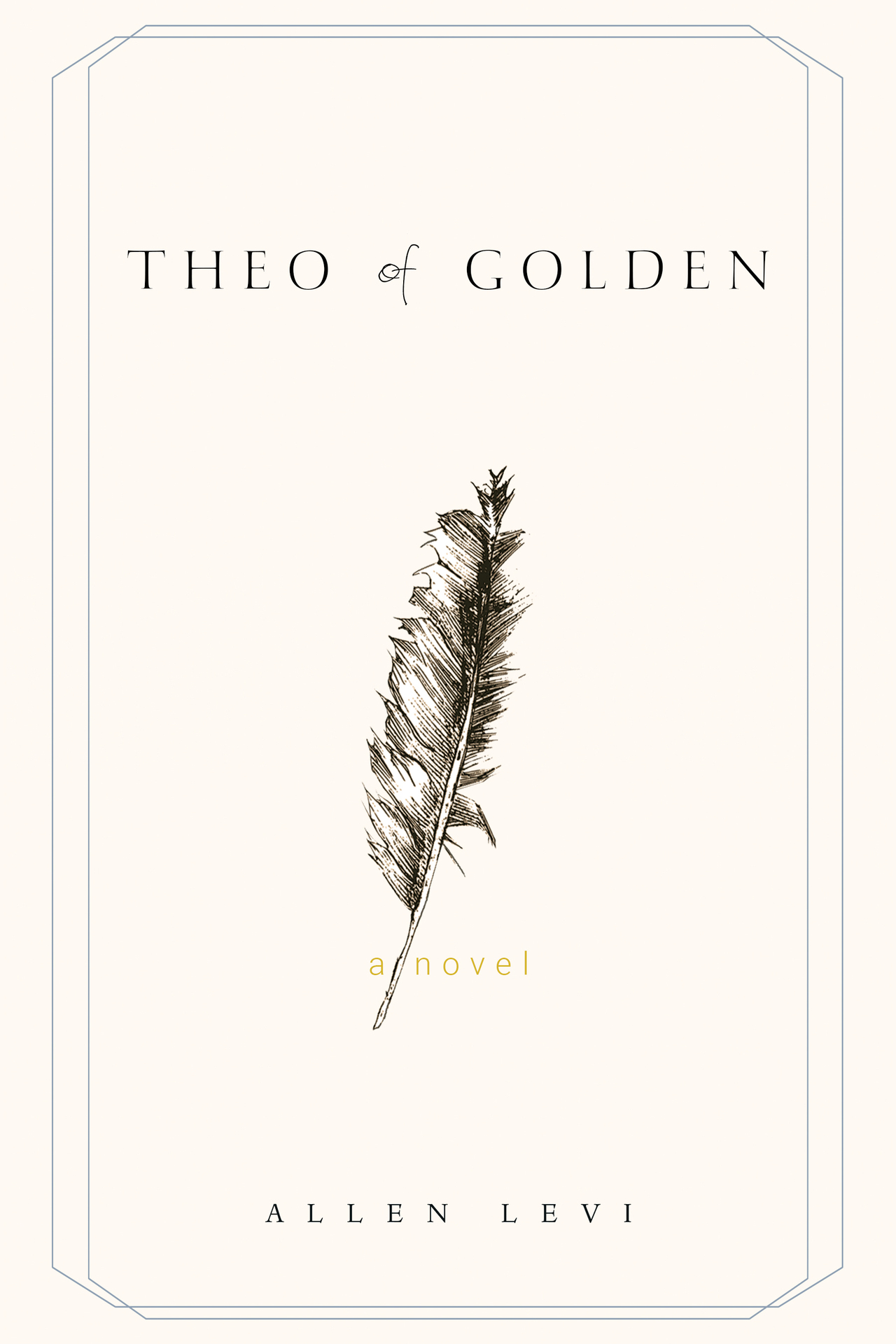
Theo of Golden_ A Novel

Step into a heartfelt Southern tale of music, faith, and redemption with Theo of Golden: A Novel by Allen Levi. Experience this moving story through an Instant Digital Download in Premium Quality EPUB/PDF, crafted for seamless reading. Available Exclusive to Noveliohub, this novel invites you into a world where ordinary lives reveal extraordinary grace.

Share :

Description

Welcome to Noveliohub – Your Premium Digital Reading Destination

At Noveliohub, we bring stories to life through high-quality digital formats designed for today’s readers. With Theo of Golden: A Novel by Allen Levi, you gain instant access to a deeply moving narrative that blends small-town charm with profound spiritual insight. Delivered as a Premium Quality EPUB/PDF, this eBook ensures a smooth, immersive reading experience across all devices—whether you’re on your phone, tablet, or desktop.

When you choose the Theo of Golden: A Novel PDF Download, you’re not just purchasing a book—you’re unlocking a meaningful literary journey, instantly accessible and permanently yours.


The Hook: A Story That Resonates Beyond the Page

In the quiet Southern town of Golden, life moves at a steady, familiar pace. Yet beneath the surface lies a tapestry of stories waiting to be told. At the center is Theo—an unassuming man whose presence subtly shapes the lives around him. Through a series of interconnected moments, the novel reveals how kindness, music, and faith ripple outward in unexpected ways.

Theo of Golden: A Novel by Allen Levi is not driven by dramatic twists or high-stakes conflict. Instead, it captivates through its authenticity—portraying everyday people navigating love, loss, and redemption. Each character carries their own burdens, and through Theo’s quiet influence, they begin to see life differently.

This is a story about transformation—not through grand gestures, but through small, meaningful connections. Readers will find themselves drawn into Golden’s world, where every interaction holds significance and every chapter reveals a deeper truth about the human spirit.

If you’re seeking a novel that offers reflection, warmth, and emotional depth, the Theo of Golden: A Novel PDF Download is a perfect addition to your digital library.


Why Readers Love Allen Levi

Allen Levi has built a reputation as a storyteller who writes with heart, authenticity, and purpose. Known for blending themes of faith, music, and Southern culture, his work resonates with readers who appreciate thoughtful, character-driven narratives.

His writing often falls within the realms of literary fiction, Christian fiction, and contemporary Southern storytelling. What sets Levi apart is his ability to craft stories that feel both intimate and universal—stories that speak to the soul without being overly didactic.

Fans of Allen Levi admire his gentle storytelling approach. Rather than relying on fast-paced plots, he focuses on relationships, personal growth, and spiritual discovery. This makes Theo of Golden: A Novel by Allen Levi especially appealing to readers who enjoy reflective, meaningful fiction.

With each book, Levi continues to build a loyal readership that values depth over spectacle—and Theo of Golden is a shining example of his signature style.


Deep Dive: Themes, Style, and Audience (No Spoilers)

At its core, Theo of Golden: A Novel explores themes of grace, redemption, community, and the quiet power of influence. The novel suggests that even the most ordinary individuals can leave a lasting impact on others—often without realizing it.

Themes

One of the strongest themes in the book is the idea of unseen influence. Theo is not a conventional hero; he doesn’t seek attention or recognition. Yet his actions and presence subtly guide others toward healing and understanding. This theme resonates deeply in a world often focused on visibility and achievement.

Faith also plays an important role, though it is woven naturally into the narrative rather than presented overtly. Readers of Christian fiction will appreciate the spiritual undertones, while general audiences will still connect with the universal messages of hope and compassion.

Writing Style

Allen Levi’s writing style is lyrical, reflective, and character-driven. He uses rich yet accessible language to paint vivid portraits of life in a Southern town. The pacing is deliberate, allowing readers to fully absorb each moment and connect with the characters on a deeper level.

Dialogue feels natural and purposeful, often revealing more through subtext than direct exposition. The storytelling unfolds like a series of interconnected vignettes, gradually building a cohesive and emotionally satisfying narrative.

Target Audience

This novel is ideal for readers who enjoy:

  • Thoughtful, introspective fiction
  • Stories centered around community and relationships
  • Faith-based or spiritually uplifting narratives
  • Southern literary settings

If you appreciate books that linger in your mind long after the final page, the Theo of Golden: A Novel PDF Download is an excellent choice.


The Noveliohub Premium Experience

When you purchase Theo of Golden: A Novel by Allen Levi from Noveliohub, you receive far more than just an eBook—you gain access to a premium reading experience designed with convenience and quality in mind.

Instant Access

No waiting, no shipping delays. Your Instant Digital Download is available immediately after purchase, so you can start reading within seconds.

Premium Quality Formats

Enjoy your book in EPUB and PDF formats, optimized for clarity, readability, and compatibility across all major devices.

Device Compatibility

Whether you prefer reading on Kindle, iPad, Android, or desktop, your eBook adapts seamlessly to your preferred platform.

Lifetime Access

Once purchased, your book is yours forever. Re-download anytime without restrictions.

No Subscription Required

Unlike other platforms, Noveliohub offers one-time purchases—no monthly fees, no hidden costs.

Choosing the Theo of Golden: A Novel PDF Download from Noveliohub ensures a smooth, reliable, and high-quality reading experience every time.


Reviews

There are no reviews yet.

Be the first to review “Theo of Golden_ A Novel”

Your email address will not be published. Required fields are marked *

Related Products

The Let Them Theory

Original price was: $17.99.Current price is: $6.99.

The Housemaid: An absolutely addictive psychological thriller with a jaw-dropping twist

Original price was: $6.99.Current price is: $0.79.

Broken Country (Reese’s Book Club)

Original price was: $14.99.Current price is: $4.49.

James (Pulitzer Prize Winner): A Novel

Original price was: $14.99.Current price is: $3.99.

Outlive_ The Science and Art of Longevity

Original price was: $11.99.Current price is: $3.49.

Limited Time Offer

Get up to 50% OFF on Premium PDF Books Read more.

Testimonials

What Our Readers Say

Thousands of readers trust Novel IO Hub for quality ebooks and meaningful impact.
Here’s what our community says about their experience with our platform.

CHAPTER 1

On his first full day in Golden, Theo woke early, pulled
back the curtains of his hotel room, and looked out
over the southern dawn. He had arrived the previous
afternoon from his home in New York City, where winter,
with a newsworthy late-season mixture of snow and ice,
was in full fury. The flight to Atlanta (on a private jet) and
the drive farther south to Golden (in a chauffeur-driven
Lincoln Town Car) had transported him to a world of
warmth, abloom in myriad shades of green, yellow,
lavender, and pink.
Now, waking from a night of restful sleep, he stood inches
from the window and breathed deeply, as if he might
somehow inhale the freshness of morning through the
panes of glass. He gazed admiringly at the first touches of
springtime.
His eyes moved westward to the broad, meandering flow
of the Oxbow River. A ribbon of fog hovered over the water.
From three stories up and through the dim light before
sunrise, Theo recognized many of the landmarks he had
studied in preparation for his trip: the cobblestone streets,
the Iron Works, the old cotton warehouses, the antebellum
oaks.
But three stories up was not nearly close enough for
someone of his inquisitive disposition. He dressed
comfortably, inspected himself in the mirror, straightened
his collar and scarf, and turned off the lights. He hung a “Do
Not Disturb” sign on the door handle and took the stairs to
the hotel lobby. He tipped his hat to the desk clerk and
stepped out into the cool morning, eager to walk the streets
before they became busy with foot traffic and automobiles.
Other than a coffee shop and a small diner, the businesses
along Broadway were closed. Theo had the sidewalk almost
entirely to himself as he began his walk.
He had no particular destination or goal in mind.
Whenever he saw an object or sight that interested him —
and he was a man very easily interested — he paused and
lingered until his curiosity was satisfied.
He was, for instance, interested in the ornamental iron
work on the facade of the corner building. Who made it?
When? How?
He was interested in the composition of the bricks in the
old but well-preserved building that now housed a college
admissions office.
He was interested in the plaque that told the story of the
median, called the Promenade, that ran down the middle of
Broadway. (Wherever he lived or traveled, Theo made a
habit of reading historic markers, something he was able to
do proficiently in five languages.)
He was interested in a sculpture, of modern vintage, near
the entrance of the university nursing school.
He took particular interest in a small bird that perched and
begged for crumbs from a bench along the sidewalk.
Theo stopped, bent slightly at the waist with his hands
clasped behind him, and whispered to the imploring
creature. “I’m sorry, dear fellow, but I have nothing to give
you this morning. Perhaps tomorrow? And stop complaining.
Be glad you’re not in New York today.”
He picked up an empty beer bottle and put it in a nearby
trash can.
At one point, he took out a small magnifying glass, a
loupe, from his pocket to study a purplish azalea bloom.
And on and on.
Those punctuations of interest turned Theo’s walk into a
crawl. By the time he had gone a mere two blocks, morning
traffic was steady, the sidewalks were beginning to buzz
with students and businesspeople, and the parking spaces
on both sides of the Promenade, which had been vacant
earlier, were almost full.
But not to worry.
On this day, and for the foreseeable future, Theo had no
deadlines, no meetings, and no obligations. He was at
liberty to enjoy the carefreeness of unfettered flexibility and
complete anonymity. He was a mere tourist.
He did not know a soul in the town.
Well . . . perhaps one.
He was not yet certain how long he would be there —
weeks, months, longer? — but in very short order, he was
pleased with the feel of his new temporary home.
First impression: a very pleasant place to be, and
appropriately named.
Golden.
CHAPTER 2
A
s Theo concluded his stroll along Broadway, he returned to the
small coffee shop he had passed earlier that morning. The
aroma of caffeine hung like a scented cloud (and functioned as
highly effective advertising) at the entrance to the business.
A
painted windowpane next to the door identified the
establishment in gold letters outlined in black:
The Chalice
Light Street and Broadway
Monday through Thursday, 6 a.m. to 10 p.m.
Friday and Saturday, 7 a.m. to 11 p.m.
Sunday, 8 a.m. to 6 p.m.
Once inside, Theo took a deep breath and scanned the room.
Standing, sitting, alone and in small clusters of various
generations, ethnicity, and attire, people of all sorts had gathered in
witness to the shop’s magnetic pull.
A young man leaving the building with a cello on his back and a
coffee in hand skillfully navigated the tables and the incoming
customers with occasional whispers of “excuse me.” He caught
Theo’s eye with a sideways glance, smiled, nodded, and spoke a
greeting. Such a thing was unusual, even suspect, in the big cities
where Theo had spent most of his life, but he reciprocated the
gesture with a nod and a smile, then stepped toward the short line
where orders were placed.
He sensed that he might become a regular there, an intuition that
proved true for the year he lived in Golden.
If only the coffee is as rich as the ambiance, he thought.
That wishful possibility seemed unlikely.
Theo was used to the strong coffees of Europe — abatanado and
café pingado in Lisbon, café con leche in Madrid, espresso in
Bologna, café noisette in Marseilles. The American shops had often
disappointed him, even in New York, where, for every excellent cup
he’d consumed, he had endured a half dozen letdowns. His
standards, he had been told, were rather exacting.
The old man exchanged a greeting with the barista at the counter,
placed his order, received his drink, and took a seat in a nearby
armchair.
He was more than a little surprised at the quality of the espresso
and nodded approvingly as the first sip rested on his tongue.
He studied the room: the customers’ faces, their voices, greetings,
and gestures; the care with which the cheerful barista did his work;
the activity from table to table.
But in short order, his attention was drawn to and fixed entirely on
the artwork that covered the walls of the shop.
On the left, right, and rear walls were portraits, ninety-two of them
in total, done in pencil on white paper and in black frames of three
sizes. All had obviously been done by the same artist. And, as if to
reflect the customers in the shop at that moment, the collection
included a full range of humanity — age, race, and expression.
Portraits and portraits and more portraits.
Even from the distance between himself and those framed faces,
Theo perceived the richness of detail and delicacy with which they
had been rendered. There was a quality to them, an aliveness, that
would almost make one believe the people portrayed were
spectators of the Chalice rather than mere adornments on the walls.
The old man’s mind began to spin a fanciful vision: each of the
ninety-two frames is a window. Each face depicted in the frames is
standing outside the building, peeking in with amusement at the
customers on the inside. At night, when the shop is closed, the faces
in the portraits leave their frames, step inside the shop, mingle, talk
about who and what they’ve seen or overheard that day, share
stories, and then return home by opening.
He smiled at the colorful, if ludicrous, idea. Such things crossed his
mind frequently.
He had the imagination of a poet.
But he had, too, the eyes and mind of a connoisseur. Though he
was easily interested in many things, he was keenly interested in a
particular few. Portraiture fell into that category.
And so, while he wanted very much to study each of the ninety
two drawings closely and slowly, he decided to wait for a more
opportune time, when the shop was less crowded.
For now, he drank his espresso in small, deliberate sips. To do
otherwise, in his mind, would have been disrespectful, even
irreverent, to the barista’s art. When he finished his drink, he took
up his hat, sauntered out of the shop with glances to the left and
right, and returned to the hotel.
Later that afternoon, following lunch and a nap, Theo walked to
the river, strolled a section of paved pathway south to north, sat for
a quarter hour with his face sunward, and then made his way back
to the coffee shop. Aside from a few tables occupied by students,
the place was empty.
There was no line at the counter when Theo stepped up to place
his order.
“Welcome back,” the barista said. “Twice in one day.”
Theo was impressed that the man remembered him, especially
given the number of customers who had been in the shop at rush
hour earlier in the day.
“My dear fellow, you made a superb espresso this morning. Well
done and thank you. Perfectly je ne sais quoi. I have returned for
the encore.”
The younger man chuckled. He didn’t often hear French in the
Chalice. “Well, thank you, sir. I will aim to make this one even better.
If it’s not just right, please let me know. My name is Shep. And you
are . . .?”
Shep reached a hand across the counter. The old man grasped it in
both of his. “My friends call me Theo. It is very nice to meet you.”
Shep noted the precise enunciation and foreign accent in the old
man’s speech.
“And you as well. What brings you to Golden?”
”I am here on business. But right now I’m very interested in the
portraits.” Theo gestured toward the walls. “I noticed them this
morning and am back to look at them more closely. Can you tell me
about them?”
By then a group of four women had entered the shop and formed
a line behind Theo.
“I’ll be glad to, Mr. Theo, soon as I get a break. But here’s
something that will get you started. It might answer some of your
questions. And I want you to tell me about you when we get a
minute.”
Shep handed Theo a local magazine, The Gold Standard. On the
cover was a picture of the coffee shop, taken at the entrance
through a fisheye lens that caught all three walls — left, right, rear
— and most of the portraits. In the center of the picture stood Shep
and another lean, slightly gray-headed man, dressed in jeans, a T
shirt, and a tweed jacket. The caption read, “The Art of the Chalice.”
Theo opened the magazine, turned to the article, and began
reading.
It began as a lark. A “what if?”
A “would you?”
A “maybe.”
Coffee shop as art gallery.
But that is what the Chalice, one of the city’s most popular downtown
businesses, has become in recent months. Located at the corner of Light
Street and Broadway, the Chalice is owned and operated by Shep and Addie
Carlile, both natives of Golden.
They bought the unoccupied three-story building during the early days of
the downtown renaissance and, for almost a year, spent weekends and free
time renovating the ground floor. When the building was finally completed,
they left their bank jobs, apprenticed at an upscale coffee shop in Atlanta for
two months to learn the art of coffee, and eventually opened their doors to
strong sales and five-star reviews. The Chalice offers a limited premier
assortment of drinks and light pastries.
Since the shop’s opening, a loyal clientele has led to a thriving business. Its
location — within two blocks of performance venues, restaurants, retail
businesses, the courthouse, and Golden University’s School of Art and Design
— provides the Chalice with a steady stream of customers. Go any day at any
hour, and you’ll see a variety of faces among the patrons.
Some of those faces never leave the room!
The Chalice is a few streets away from the home and studio of Asher
Glissen, also a native of Golden and one of its most prominent artists. Over
the course of his career, he has taught private lessons, served as curator of
the Bredlow Center for the Arts, illustrated numerous ad pieces and
periodicals, and become renowned as a master of portraiture.
When the coffee shop opened, Glissen was one of the first customers in line.
He claims to have spent a sizable portion of his retirement savings on coffee
within months of the shop’s opening.
A year ago, the Carliles invited Glissen to display some of his artwork in the
shop. He took the idea and ran with it.
Shep Carlile explains, “Asher said he had something in mind but didn’t tell us
what it was. About a month later, he showed up with half a dozen portraits of
some of our regular customers. We were floored. It took off from there.
People love it. Some folks come in just to look at the drawings. We’re really
proud to have them here.”
There are presently 92 portraits on display. All are for sale. When one sells,
another piece takes its place.
Glissen speaks of the coffee shop in glowing terms. “The Chalice has
become an institution down here, a real melting pot. I’ve tried to capture that
in the portraits. My mother, who was an artist, used to tell me that every face
is a story. I think she was right. These drawings are a neighborhood in their
own right. It’s been a labor of love to bring them together. I’m thankful that
Addie and Shep have given them a home.”
Glissen can often be seen at the Chalice and elsewhere downtown, camera
in hand, photographing material for his work. If you’re in the coffee shop, he
might well ask you to look his way. If he does, don’t be surprised if you
become part of the Chalice gallery.
More customers entered the shop. While Shep prepared their
drinks, Theo reread the article, then rose from his chair and walked
to the rear of the room.
A dozen portraits, three rows of four, were hung in neat lines on
the back wall. Each was a head-and-shoulders composition. Theo
removed a pair of wire-rimmed eyeglasses from his pocket, looped
them over his ears, clasped his hands behind his back, and began to
study the drawings from a yard away. One moment his head was
held down to look over the top of his eyeglasses; the next his head
tilted back to look through the lenses perched at the end of his nose.
An art historian at the Louvre could not have been more engaged
with or enthralled by the masterpieces at that great museum than
the old man was by the portraits in the Chalice.
He moved closer, a foot or so from the wall, and scrutinized each
drawing down to the most intricate of pencil lines. He was oblivious
to time and to the goings-on in the shop around him.
When Shep had filled all his drink orders, he spotted Theo across
the room but chose not to disturb him. He was pleased that the old
fellow was so absorbed in the artwork but was also curious at what
might be behind such keen interest.
Even as a boy, Theo had been fascinated by fine lines and
intricacy. Much of his childhood was spent peering through a
magnifying glass at feathers, leaves, and insects in the vineyards
around his home. He was bedazzled by spiderwebs, dragonfly wings,
and the undersides of mushrooms. He collected postage stamps and
was spellbound when he had first seen Da Vinci’s line drawings and
sketches. As a young adult and later, it had been his habit to carry a
loupe — a gift from a teacher — in his pocket in order to examine
small objects and details not visible to the naked eye. For one like
him, the portraiture in the Chalice was an embarrassment of riches,
a treasure trove, a visual feast.
At every frame, Theo leaned forward and genuflected, a man
transfixed.
He moved to the front of the shop and resumed his perusal, once
directly over the heads of customers sitting at a table abutting the
wall. He begged their pardon but did not alter his course.
For him, each face revealed a mood that hinted at a story and
begged a question.
What is that fellow so worried about?
Why is the young woman so bashful?
How would I describe the expression on that child’s face?
And how, dear God, does the artist render each one so
convincingly, over and over?
As he studied the pieces, Theo became increasingly perplexed,
troubled even, that so many of the portraits were still available for
sale. He was baffled by their price tags. Only $125 for this? Only
$200? They are worth far more than that. Why, he wondered, were
ninety-two portraits of this quality, at these prices, still unsold?
He lingered at the portrait of a young woman with delicate
features, unsmiling, and with eyes that looked directly into his. They
had a haunting familiarity about them. Could it be?
From her, he moved his attention one frame to the right, to the
face of a young man looking away from the artist at something
outside the frame. What was in those darting eyes? Fear? Suspicion?
Contempt? Whatever it was, he seemed ill at ease in front of the
camera. He wore a winter cap and a high collar that indicated cold
weather.
Theo had been studying the portraits for almost an hour when
Shep finally joined him.
“They are something else, aren’t they?”
Shep was wiping his fingers on a hand towel. He nodded to the
portrait in front of Theo, the one of the young man with the nervous
eyes.
“That fellow’s been through some hard stuff. His little girl got hurt
real bad in a car accident a while back. The mother was killed. He
doesn’t come here very often, but he usually just wants a regular
coffee with room for cream. I don’t think he even knows his picture
is up here.”
Theo nodded and turned to Shep.
“Do you know all the people on the walls?”
“I know most of them at least a little bit. Some I know pretty well.
Some I don’t know at all. The artist usually writes their names in
small letters on the backs of the frames, so I can tell who they are if
I need to know for some reason. But Mr. Theo, before we talk about
them, please tell me about you. What’s your story? You said you’re
new to town. What brings you here? Where’s home?”
Theo waved off the questions before giving a short answer.
“I have lived in a number of places. I was born and raised in the
north of Portugal, but I have lived for many years in New York City. I
still have a place there, but I’m here on a bit of business, and my
home today is Golden. Only one day and already I am very fond of
your city. And Mr. Shep, I particularly like your shop.”
The politely vague answer hardly constituted the story that Shep
had hoped for, but he didn’t press. A fuller version would perhaps
unfold in time.
“Please, just call me Shep. That’s what my friends call me. No
Mister.”
“Of course, thank you. And please, call me Theo. Speaking of
names, why the Chalice?”
Now it was Shep’s time to be evasive. “It had a nice ring to it. I’ll
tell you the longer story one of these days. Did you read the article
about the portraits?”
Theo nodded. “I did, thank you. Very interesting.” He handed the
magazine back to Shep.
“Mr. Shep — excuse me, Shep — one thing I don’t understand.
Why do people not buy the portraits?”
Shep grimaced, then rocked his head left to right a couple of times
in search of a proper response. “That’s a mystery to me, too, Theo. I
know Asher’s got plenty to do, and he probably doesn’t need any
more work, but I was hoping this might create some business for
him. So far it hasn’t worked out that way. Not yet. We sold a good
number at Christmas last year, but I’m still waiting for a big
breakthrough. I have to believe that one of these days, people are
going to realize what a treasure these are. Asher did one of Addie —
that’s my wife, Addelyn — and it’s one of my most prized
possessions. If my house ever catches fire, it’ll be one of the first
things I grab on the way out.” Shep hesitated. “We love having them
here, but I wish someone would come along and buy all of them.”
Theo’s eyes widened slightly. He moved his hand to his mouth,
thumb under his chin and index finger tapping his lips.
Shep looked toward the counter. A customer was waiting to place
an order.
“Theo, I better get back to work. Thanks for coming in. You know,
if you become a regular here, there’s a good chance you’ll end up on
the wall someday. Welcome to Golden. Incidentally, how was the
coffee?”
“Superb. Exceptionnelle! Maravilhoso!” Theo smiled, applauded
softly, then patted Shep on the arm. He walked out of the shop,
crossed the street to the median, and took a seat on a bench near
the fountain.
He thought of the unsold portraits.
Of the homes that would be beautified and the lives that would be
enriched by their presence.
Of the artist who would be encouraged by their sale.
It was there that the idea formed in his mind.