📚 Help Us Bring Stories to Everyone

Original price was: $10.44.Current price is: $2.25.

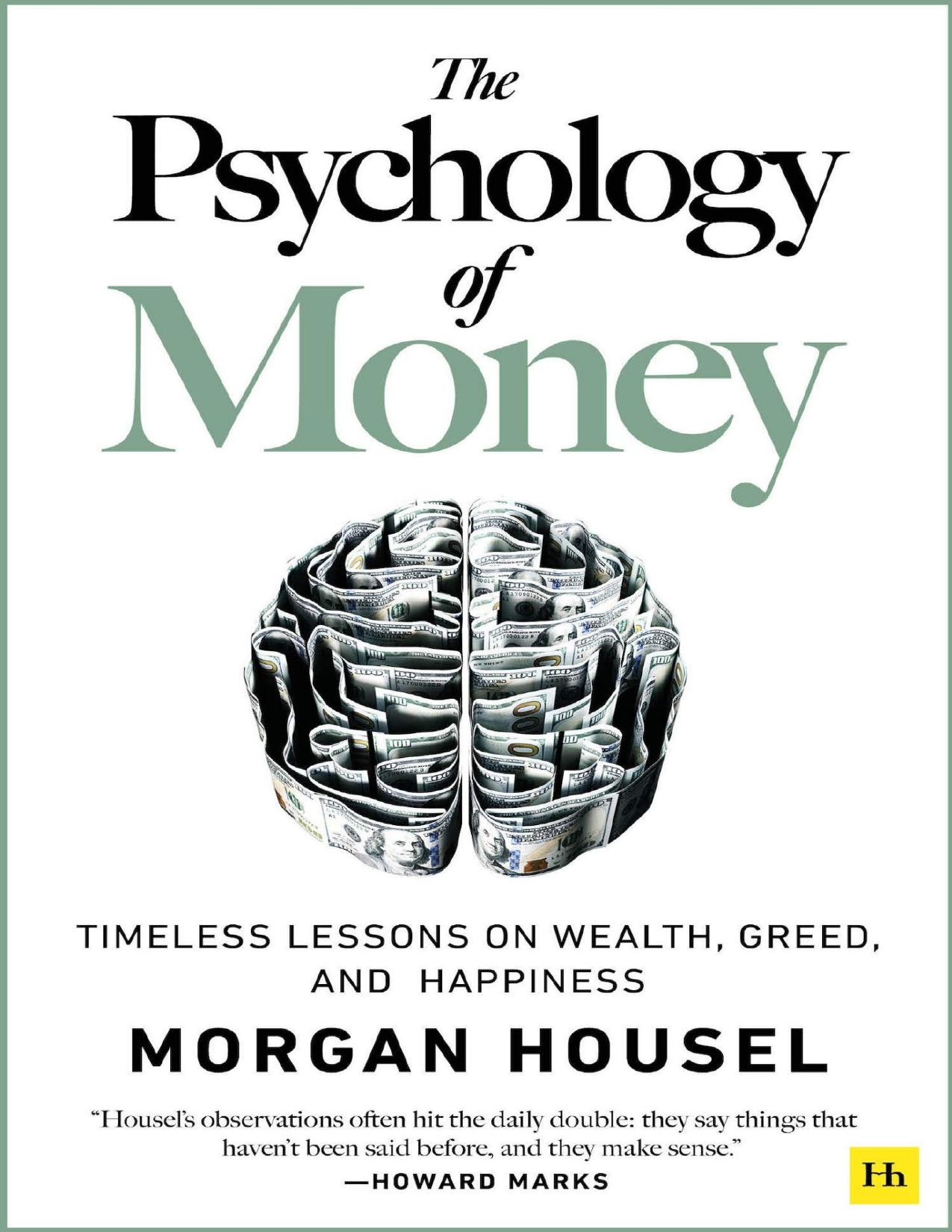
The Psychology of Money

Discover the counterintuitive truth that financial success isn’t about what you know, but how you behave. In this Instant Digital Download, access Morgan Housel’s timeless exploration of greed and happiness in Premium Quality EPUB/PDF format. Exclusive to Noveliohub, unlock 19 short stories that will change the way you think about wealth forever.

Share :

Description

The Psychology of Money

Introduction

Welcome to Noveliohub, your premier destination for premium digital reading. We believe that a great book deserves a flawless delivery system. That’s why we’ve curated Morgan Housel’s masterpiece, The Psychology of Money: Timeless lessons on wealth, greed, and happiness, exclusively for our library. This is not just another financial advice manual; it is a profound study of human nature wrapped in dollar bills. With Noveliohub, you bypass the shipping wait and the cluttered secondhand market. You are seconds away from instant access to a Premium Quality EPUB/PDF that syncs seamlessly across your entire digital ecosystem. No subscriptions, no waitlists—just pure, insightful reading available exclusively for the discerning Noveliohub community.

The Hook: A Spoiler-Free Summary of the Premise

Why do brilliant investors go broke while unassuming janitors die with millions in the bank? Why is it so hard to feel like you have “enough”? The Psychology of Money doesn’t answer these questions with Excel formulas or complex stock tickers. Instead, Morgan Housel provides a masterclass in the soft skills of finance—skills that are taught in the school of life, not the halls of Harvard Business School.

The book is structured as a collection of 20 compelling chapters (or stories), each illustrating a singular, powerful lesson about money. You will learn why time is the most powerful variable in the compound interest equation, but why patience is the scarcest resource on Earth. You will explore the dangerous allure of extreme wealth and the hidden cost of comparison. Housel uses a blend of historical anecdotes, behavioral psychology, and economic data to dismantle the myth that money is purely mathematical. Instead, he reveals it as a deeply emotional, ego-driven, and often messy reflection of who we are.

When you secure your The Psychology of Money PDF Download from Noveliohub, you are arming yourself with a mental framework for navigating the “Room for Error” life demands. It’s a guide to understanding why the goal isn’t just to get rich, but to stay rich and sleep soundly at night. It’s a spoiler-free promise that the final page will leave you looking at your bank account—and your life—with a completely new set of eyes.

Why Readers Love Morgan Housel

Morgan Housel is not a typical Wall Street talking head. He is a two-time winner of the Best in Business Award from the Society of American Business Editors and Writers and a former columnist for The Motley Fool and The Wall Street Journal. But readers don’t gravitate toward him just for his resume; they love him for his humility and his ability to translate complex, anxiety-inducing topics into calm, digestible wisdom.

In the finance writing genre, which is often dominated by noise, predictions, and ego, Housel stands out as a quiet observer. He is the voice of reason in a world screaming about the next hot stock. His reputation is built on long-term thinking and narrative storytelling. Rather than telling you what to buy, he tells you why you buy what you buy. This has earned him a cult following among everyone from professional hedge fund managers to twenty-somethings opening their first Roth IRA. He makes you feel like you’re having a beer with the smartest, kindest person in the room who just happens to know a lot about how humans mishandle money.

Deep Dive: Themes, Writing Style, and Target Audience

Themes Explored:
The Psychology of Money is built on the foundation that Behavior > Knowledge. Here are the core themes you will encounter in this Premium Digital Download Exclusive to Noveliohub:

  1. Luck & Risk: Housel deftly explains that no outcome is purely the result of individual effort. Every success story has a cousin named Luck, and every failure knows someone named Risk. Recognizing this cultivates humility and, crucially, grace for others.

  2. Getting Wealthy vs. Staying Wealthy: This is the central thesis of the book. Getting money requires risk-taking, optimism, and putting yourself out there. Keeping money requires the opposite: humility, fear, and paranoia. Housel argues you need to master both polar-opposite skills to win the game.

  3. The Seduction of Pessimism: Why does pessimism sound smarter than optimism? Because if you’re pessimistic and wrong, you just look like everyone else. If you’re optimistic and wrong, you look naive. Housel unpacks why expecting the world to break is a costly survival instinct.

  4. Enough: In a world of infinite upside and constant comparison, defining “Enough” is the highest form of financial intelligence. There is no number that solves the problem if you haven’t decided when to stop playing the game.

  5. The Long Tail: You will be wrong a lot. The best investors are wrong half the time. The secret is that the gains from a tiny handful of winners (“long tails”) can outweigh a mountain of small, disciplined losses.

Writing Style:
Housel’s prose is accessible and fluid. He doesn’t use jargon to sound smart; he uses simple, concrete words to make you feel smart. The book reads like a collection of essays you can digest one per night before bed. It’s the kind of writing that is so clear you barely notice the words—you just absorb the ideas.

Target Audience:

  • The Skeptical Saver: Anyone who feels anxious about money despite having “enough” in the bank.

  • The Young Professional: Those early in their career who need to understand the real power of compound interest (time) over hot stock tips.

  • The Burnt-Out High Earner: Those making great money but realizing their lifestyle is an accelerating treadmill.

  • Fans of Atomic Habits or Thinking, Fast and Slow: This book sits at the perfect intersection of self-improvement, psychology, and practical finance.

The Noveliohub Premium Experience

Why should you add this title to your cart at Noveliohub instead of searching for a free, virus-laden PDF on a shady forum?

  • Instant Access & Zero Wait: The moment your payment clears, your download link is ready. No waiting for postal mail, no need to visit a store. Start reading Morgan Housel’s wisdom in under sixty seconds.

  • Premium Quality Formats: We provide both EPUB (for Kobo, Apple Books, Android readers) and PDF (for desktops and tablets). Our files are meticulously formatted, cleaned of OCR errors, and optimized for crisp text rendering on any screen size.

  • Lifetime Access & Device Freedom: Unlike subscription services that hold your library hostage, when you buy The Psychology of Money at Noveliohub, you own the file. Load it onto your phone, e-reader, laptop, or tablet. It travels with you, no matter what platform you use.

  • Curated Exclusivity: Noveliohub is not a messy, algorithm-driven marketplace. We hand-pick titles that matter. You aren’t just buying a file; you are investing in a curated reading experience backed by a team that loves books as much as you do.

Comparison / Reading Order (If You Love X, You’ll Love This)

The Psychology of Money by Morgan Housel is a standalone masterpiece. You do not need to read any prior books to understand or enjoy this work.
However, if you are a fan of the following authors or books, this is a must-add to your Noveliohub collection:

  • If you loved Sapiens by Yuval Noah Harari: You’ll appreciate the same long-zoom lens applied not to human history, but to human financial behavior.

  • If you loved Atomic Habits by James Clear: Housel is the finance equivalent of James Clear. He shows how tiny behavioral tweaks (like a slightly higher savings rate or a 1% reduction in ego-driven spending) compound into generational wealth.

  • If you loved Thinking, Fast and Slow by Daniel Kahneman: This is the practical, real-world application of Kahneman’s behavioral economics on Wall Street and Main Street.

  • **If you enjoy listening to Naval Ravikant: Housel echoes Naval’s wisdom on wealth being about freedom of time, not flashy status symbols.

Conclusion / Call to Action

Money is the single greatest source of stress for most adults, yet we spend more time learning to drive a car than learning how to think about our finances. The Psychology of Money isn’t a get-rich-quick scheme; it’s a stay-rich-forever philosophy.

You have two choices: you can continue to let the market’s noise dictate your mood, or you can download The Psychology of Money by Morgan Housel and finally gain the clarity needed to make better decisions. This is the book you will find yourself gifting to friends and re-reading every few years as a personal financial check-up.

Don’t wait for “someday” to understand the rules of the game.
Secure your Premium Digital Download instantly. Click Add to Cart now and join the thousands of Noveliohub readers who have discovered that the secret to wealth isn’t in the numbers—it’s in the narrative you tell yourself about those numbers.


Reviews

There are no reviews yet.

Be the first to review “The Psychology of Money”

Your email address will not be published. Required fields are marked *

Related Products

The Housemaid’s Secret

Original price was: $7.99.Current price is: $1.49.

The Housemaid Is Watching:

Original price was: $7.99.Current price is: $1.49.

The Wife Upstairs: A twisted psychological thriller that will keep you guessing

Original price was: $4.99.Current price is: $0.99.

My Husband’s Wife: A Novel

Original price was: $14.99.Current price is: $4.00.

Atomic Habits_ Tiny Changes, Remarkable Results

Original price was: $12.99.Current price is: $2.99.

Limited Time Offer

Get up to 50% OFF on Premium PDF Books Read more.

Testimonials

What Our Readers Say

Thousands of readers trust Novel IO Hub for quality ebooks and meaningful impact.
Here’s what our community says about their experience with our platform.

Ispent my college years working as a valet at a nice hotel in Los Angeles.
One frequent guest was a technology executive. He was a genius, having
designed and patented a key component in Wi-Fi routers in his 20s. He had
started and sold several companies. He was wildly successful.
He also had a relationship with money I’d describe as a mix of insecurity
and childish stupidity.
He carried a stack of hundred dollar bills several inches thick. He showed it
to everyone who wanted to see it and many who didn’t. He bragged openly
and loudly about his wealth, often while drunk and always apropos of
nothing.
One day he handed one of my colleagues several thousand dollars of cash
and said, “Go to the jewelry store down the street and get me a few $1,000
gold coins.”
An hour later, gold coins in hand, the tech executive and his buddies
gathered around by a dock overlooking the Pacific Ocean. They then
proceeded to throw the coins into the sea, skipping them like rocks, cackling
as they argued whose went furthest. Just for fun.
Days later he shattered a lamp in the hotel’s restaurant. A manager told him
it was a $500 lamp and he’d have to replace it.
“You want five hundred dollars?” the executive asked incredulously, while
pulling a brick of cash from his pocket and handing it to the manager.
“Here’s five thousand dollars. Now get out of my face. And don’t ever insult
me like that again.”
You may wonder how long this behavior could last, and the answer was “not
long.” I learned years later that he went broke.
The premise of this book is that doing well with money has a little to do with
how smart you are and a lot to do with how you behave. And behavior is
hard to teach, even to really smart people.
A genius who loses control of their emotions can be a financial disaster. The
opposite is also true. Ordinary folks with no financial education can be
wealthy if they have a handful of behavioral skills that have nothing to do
with formal measures of intelligence.
My favorite Wikipedia entry begins: “Ronald James Read was an American
philanthropist, investor, janitor, and gas station attendant.”
Ronald Read was born in rural Vermont. He was the first person in his
family to graduate high school, made all the more impressive by the fact that
he hitchhiked to campus each day.
For those who knew Ronald Read, there wasn’t much else worth
mentioning. His life was about as low key as they come.
Read fixed cars at a gas station for 25 years and swept floors at JCPenney
for 17 years. He bought a two-bedroom house for $12,000 at age 38 and
lived there for the rest of his life. He was widowed at age 50 and never
remarried. A friend recalled that his main hobby was chopping firewood.
Read died in 2014, age 92. Which is when the humble rural janitor made
international headlines.
2,813,503 Americans died in 2014. Fewer than 4,000 of them had a net
worth of over $8 million when they passed away. Ronald Read was one of
them.
In his will the former janitor left $2 million to his stepkids and more than $6
million to his local hospital and library.
Those who knew Read were baffled. Where did he get all that money?
It turned out there was no secret. There was no lottery win and no
inheritance. Read saved what little he could and invested it in blue chip
stocks. Then he waited, for decades on end, as tiny savings compounded into
more than $8 million.
That’s it. From janitor to philanthropist.
A few months before Ronald Read died, another man named Richard was in
the news.
Richard Fuscone was everything Ronald Read was not. A Harvard-educated
Merrill Lynch executive with an MBA, Fuscone had such a successful career
in finance that he retired in his 40s to become a philanthropist. Former
Merrill CEO David Komansky praised Fuscone’s “business savvy,
leadership skills, sound judgment and personal integrity.”¹ Crain’s business
magazine once included him in a “40 under 40” list of successful
businesspeople.²
But then—like the gold-coin-skipping tech executive—everything fell apart.
In the mid-2000s Fuscone borrowed heavily to expand an 18,000-square foot
home in Greenwich, Connecticut that had 11 bathrooms, two elevators, two
pools, seven garages, and cost more than $90,000 a month to maintain.
Then the 2008 financial crisis hit.
The crisis hurt virtually everyone’s finances. It apparently turned Fuscone’s
into dust. High debt and illiquid assets left him bankrupt. “I currently have
no income,” he allegedly told a bankruptcy judge in 2008.
First his Palm Beach house was foreclosed.
In 2014 it was the Greenwich mansion’s turn.
Five months before Ronald Read left his fortune to charity, Richard
Fuscone’s home—where guests recalled the “thrill of dining and dancing
atop a see-through covering on the home’s indoor swimming pool”—was
sold in a foreclosure auction for 75% less than an insurance company figured
it was worth.³
Ronald Read was patient; Richard Fuscone was greedy. That’s all it took to
eclipse the massive education and experience gap between the two.
The lesson here is not to be more like Ronald and less like Richard—though
that’s not bad advice.
The fascinating thing about these stories is how unique they are to finance.
In what other industry does someone with no college degree, no training, no
background, no formal experience, and no connections massively
outperform someone with the best education, the best training, and the best
connections?
I struggle to think of any.
It is impossible to think of a story about Ronald Read performing a heart
transplant better than a Harvard-trained surgeon. Or designing a skyscraper
superior to the best-trained architects. There will never be a story of a janitor
outperforming the world’s top nuclear engineers.
But these stories do happen in investing.
The fact that Ronald Read can coexist with Richard Fuscone has two
explanations. One, financial outcomes are driven by luck, independent of
intelligence and effort. That’s true to some extent, and this book will discuss
it in further detail. Or, two (and I think more common), that financial success
is not a hard science. It’s a soft skill, where how you behave is more
important than what you know.
I call this soft skill the psychology of money. The aim of this book is to use
short stories to convince you that soft skills are more important than the
technical side of money. I’ll do this in a way that will help everyone—from
Read to Fuscone and everyone in between—make better financial decisions.
These soft skills are, I’ve come to realize, greatly underappreciated.
Finance is overwhelmingly taught as a math-based field, where you put data
into a formula and the formula tells you what to do, and it’s assumed that
you’ll just go do it.
This is true in personal finance, where you’re told to have a six-month
emergency fund and save 10% of your salary.
It’s true in investing, where we know the exact historical correlations
between interest rates and valuations.
And it’s true in corporate finance, where CFOs can measure the precise cost
of capital.
It’s not that any of these things are bad or wrong. It’s that knowing what to
do tells you nothing about what happens in your head when you try to do it.
Two topics impact everyone, whether you are interested in them or not:
health and money.
The health care industry is a triumph of modern science, with rising life
expectancy across the world. Scientific discoveries have replaced doctors’
old ideas about how the human body works, and virtually everyone is
healthier because of it.
The money industry—investing, personal finance, business planning—is
another story.
Finance has scooped up the smartest minds coming from top universities
over the last two decades. Financial Engineering was the most popular major
in Princeton’s School of Engineering a decade ago. Is there any evidence it
has made us better investors